 Back to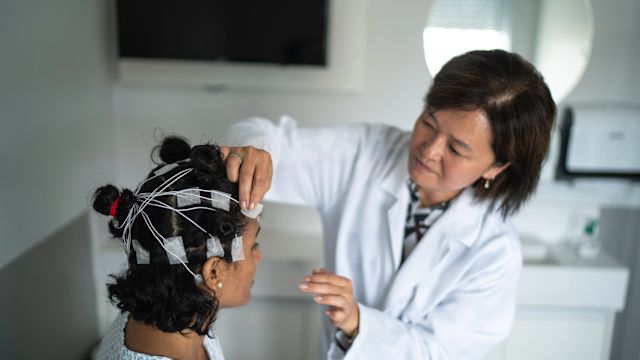
Updated on August 20, 2025
Narcolepsy is a neurological disorder characterized by excessive daytime sleepiness, the sudden urge to sleep during the day (sleep attacks), and disrupted sleep at night. People with narcolepsy can also experience other sleep-related symptoms, including sleep paralysis and sleep-related hallucinations. People with type 1 narcolepsy also experience cataplexy, sudden episodes of muscle weakness and/or paralysis.
Narcolepsy is caused by abnormal activity with the neurochemicals that regulate the brain’s sleep-wake cycle, or the brain’s internal clock. More specifically, it is caused by problems with the hypothalamus, a part of the brain that produces hormones that control sleep, hunger, temperature, and many other functions.
The causes of narcolepsy are not entirely understood. Some cases can be associated with genetic mutations, problems with the immune system, and/or infections. It most commonly begins in a person’s late teens or early 20s.
Narcolepsy can severely impact a person’s quality of life, including relationships, education, work, and functioning. While it cannot be cured, it can be treated.
Treatment begins with an accurate diagnosis.
How is narcolepsy diagnosed?
There is no single test to diagnose narcolepsy. In order to make a diagnosis, a healthcare provider will need to rule out other potential causes of symptoms. Diagnosis can involve a detailed medical history, recording sleep habits with a sleep journal, a physical exam, an actigraphy (a watch-like device that records activity and rest), and other tests as needed.
Two tests are required to diagnose narcolepsy. One is a polysomnogram (PSG), also known as a sleep study. The other is a multiple sleep latency test (MSLT).
Polysomnogram (PSG), or sleep study
This is an overnight test to study what’s happening in the body while you sleep. During this test, removeable sensors are attached to different parts of your body (the scalp, chest, arms, and fingers). These sensors monitor brain waves, heart rate, eye movement, oxygen levels, and muscle movement while you sleep.
This information can give your healthcare providers a detailed look at your sleep patterns—how long it takes you to fall asleep, how well you sleep, and how your brain waves behave during different stages of sleep. This can help identify exactly what sleep disorder you have and what treatment you require.
Multiple sleep latency test (MSLT)
This is typically conducted the day after a sleep study. It can be thought of as a “nap study.” While a sleep study measures what’s happening during nighttime sleep, an MSLT measures daytime sleepiness. A person will have four or five opportunities to sleep throughout the day, each two hours apart. It uses the same monitoring equipment used in a sleep study.
How to prepare for a sleep study and MSLT
These tests are conducted at a sleep clinic. If you will be visiting a sleep clinic, you’ll want to make sure you’re prepared. Here are a few things you’ll want to pack:
- Comfortable pajamas or clothes you’d wear to sleep at home as well as a change of clothes for when you leave
- A blanket or pillow if you think you’ll sleep better with your own
- A toothbrush and toothpaste, plus anything else you typically use before bed, such as face wash
- Any medications you are taking
- A book, music, something to watch, or anything else that usually helps you fall asleep
- ID and insurance information
Your healthcare provider will give you instructions to follow the day of your appointment, such as:
- Following your regular daily routine
- Avoiding caffeine or other stimulants
- Avoiding alcohol and sedatives
- Avoiding naps during the day
You may also be given activity monitors to wear at home to gather additional information over several days or several weeks.
Don’t hesitate to ask questions or bring up any concerns you have. For sleep study, MSLT, or any other part of the diagnostic process, a healthcare provider will be your best source of information.


