How doctors and healthcare technology will work together
Vinod Khosla, technology entrepreneur, shares his thoughts and solutions on the healthcare system.

Transcript
[MUSIC PLAYING] A long ago, we decided, humans flying a big plane, like a 747, was too complex for humans to do.
They still assist. They can still take charge at the right time. That's a good analogy for what will happen in medicine.
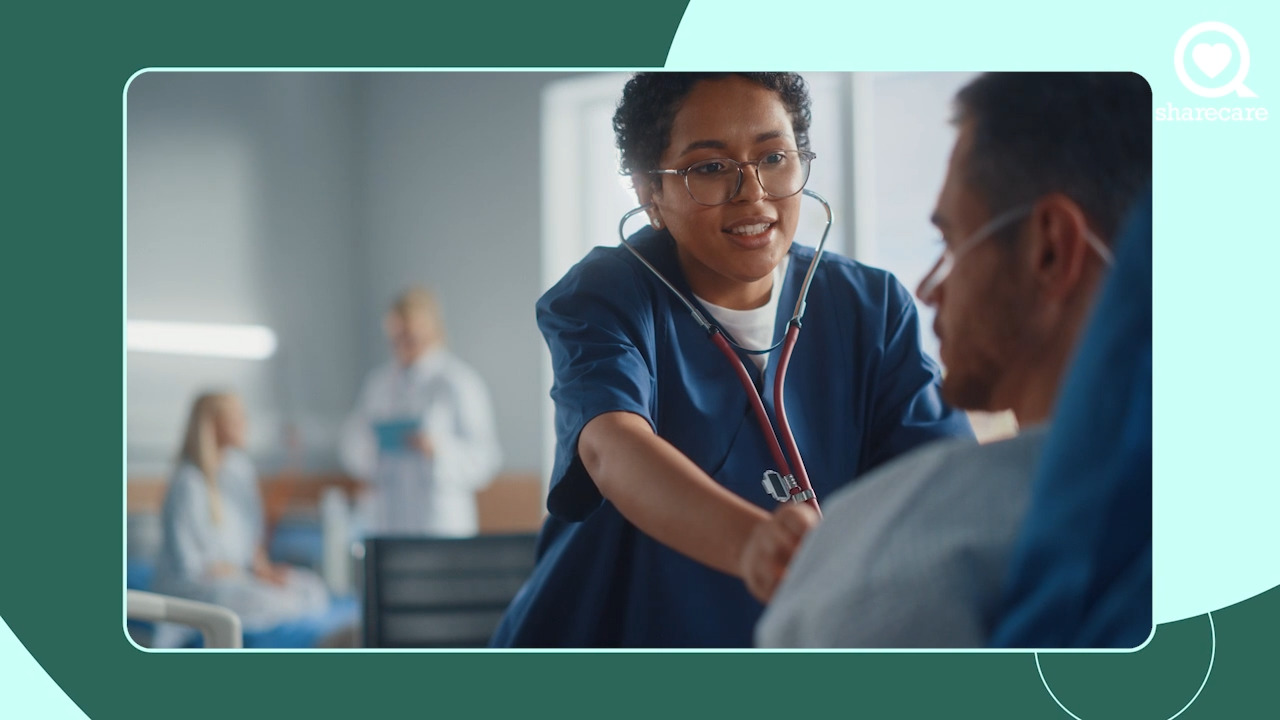
We will amplify doctors. We will assist them. Bionic assists, I call them. But we will prevent them from making errors.
Doctors today manages, whatever, 3,000 patients in lots of situations.
Comes in, in a white coat, says, what's wrong? In the first 30 seconds, he's made a diagnosis.
By the way, a lot of the misdiagnosis, and 10% to 20% of cases are misdiagnosed.
The answer isn't to say let's ignore the massive amount of data. Because there's information buried in it.
The key is to extract insights and a machine can do that. A human being cannot no matter how good an MD Not even Dr.
House. We need machines to do that for us and not pretend we are superhero doctors that can handle it all
and know it all. We will not lose that touch. In fact, we will get much more personalized. I'll give you the aspirin dosage you
should have based on your genomics and your condition. Not just whatever's been the blanket prescription for all 7
billion people on the planet. More importantly, it doesn't say that the human element of care
has to go away. But it does say we can have the most humane humans view the human element.
That may be your doctor. But it may be your nurse or a medical assistant or somebody who has the time and cares.
I got great health care because I got a concierge doctor, but most people don't. And it's OK to talk about this idealized view of medicine
I get it. I can call my doctor any time, but most people don't.
And the average MD is not like that. Because he-- and it's not the MD's fault.
He has too many patients. He has too many things to do. He spends a third of his time just filling paperwork.
And then there's this hidden disease in the health care system where we can talk about reducing health care costs,
but every dollar saved is a dollar of profit lost by somebody. Guess what?
Are they incented to change it? No. Futures are very hard to predict.
Just when all the media companies thought cable would become interactive TV,
the internet showed up on the left. And from left field, it completely revolutionized so many things from education to media
to doing research on your health care. The same will happen. We cannot predict the path, but because we can't predict it,
we can't assume it won't happen. [AUDIO LOGO]
health care



Browse videos by topic categories
A
B
C
D
E
F
G
H
I
J
K
L
M
N
O
P
Q
R
S
T
U
V
W
X
Y
Z
ALL