Advertisement

The best and worst fats for your body

Protect your heart and overall well-being by choosing foods with healthy fats.

Updated on September 18, 2025

1 / 9

If you're looking to adopt a cholesterol-friendly diet, fat isn't a bad word, say Marc Gillinov, MD, and Steven Nissen, MD, authors of Heart 411: The Only Guide to Heart Health You'll Ever Need. “The idea that fat is bad for your heart is simply incorrect," they explain.

In fact, your body needs fat. What matters most is the type of fat you put on your plate. Healthy fats—the unsaturated kind—can help lower your total cholesterol and "bad" low-density lipoprotein (LDL) cholesterol. They also help boost your "good" high-density lipoprotein (HDL) cholesterol levels.

Here's what you should know about fats, including which to limit or avoid, the healthiest kinds to enjoy, and tasty ways to add good fats to your diet.

2 / 9
Healthy fat: monounsaturated fat

Monounsaturated fat helps lower your total and LDL cholesterol levels while boosting HDL cholesterol.

"It's associated with decreases in triglyceride levels, inflammation, and blood clotting, and better blood vessel function," Drs. Gillinov and Nissen note. Triglycerides are a type of fat in the blood.

Healthy sources of monounsaturated fat include canola oil, nuts and nut oils, avocados, and sesame oil. Olive oil, in particular, can benefit your heart health.

3 / 9
How to eat monounsaturated fat

Not sure how to increase your healthy fat intake? Add cubed avocado to your lunchtime salad or on top of your morning omelet, dress your salad with olive oil, or snack on on a handful of walnuts between meals.

Fats, even the healthy kind, are high in calories, so be mindful not to overdo it. Stick to:

  • One-fourth of a medium avocado (80 calories)
  • 1 ounce of walnuts (185 calories)
  • 1 tablespoon of olive oil (120 calories)
4 / 9
Healthy fat: polyunsaturated fat

Polyunsaturated fats boast heart health benefits, too. These fats, which include omega-3 and omega-6 fatty acids, help to manage your cholesterol levels. They’re also essential for brain function and formation of the body's cells. Our bodies can't produce polyunsaturated fats, so it’s important to eat a diet rich in them.

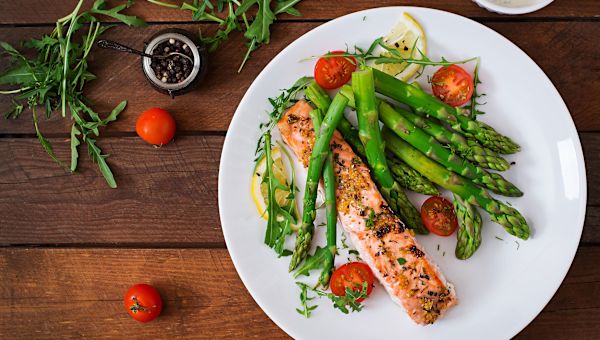
Fatty fish, like sardines and salmon, are high in polyunsaturated fats. Walnuts, flaxseeds, and canola oil are good sources, too.

5 / 9
How to eat polyunsaturated fat

Fish are an outstanding source of polyunsaturated fats, say Gillinov and Nissen. Why? Coldwater fish, like salmon, sardines, halibut, and tuna, are rich in two omega-3 fatty acids: eicosapentaenioc acid (EPA) and docosahexaenoic acid (DHA). EPA and DHA may help lower triglycerides, raise HDL cholesterol, prevent blood clots, tame inflammation, and help your blood vessels function better.

National guidelines recommend consuming about 8 ounces of fish each week. This simple recipe is a good place to start: Choose a 3-ounce filet of your favorite fish, drizzle with fresh lemon juice, top with a sprinkle of crushed walnuts and bake until the fish is flaky and your nutty crust is golden and crispy.

6 / 9
Unhealthy fat: saturated fat

Not all fats help lower your bad cholesterol levels. In fact, too much of some kinds, like saturated fats, can drive up artery-clogging LDL cholesterol. Saturated fats are found in foods like red meat, butter, full-fat dairy products, coconut oil, palm oil, and shortening.

So, how much is too much? National guidelines recommend limiting saturated fat consumption to no more than 10 percent of your daily calories. The American Heart Association recommends consuming even less, up to 6 percent of daily calories. That's 13 grams, or 120 calories, for someone eating a 2,000-calorie diet.

"Most Americans eat nearly twice this amount," Gillinov and Nissen say.

7 / 9
How to limit or avoid saturated fat

Processed meats like bacon and pastrami are typically high in saturated fat, which is potentially problematic for your cholesterol levels. They’re also high in sodium—which can increase your blood pressure—and nitrates, which may alter your body's glucose (sugar) tolerance and raise your risk of heart disease and diabetes.

So, enjoy the foods you love with less saturated fat. Replace full-fat yogurt with a cup of plain nonfat Greek yogurt, or swap the deli meat on your lunchtime sandwich with canned tuna mashed with a bit of avocado.

8 / 9
Unhealthy fat: trans fat

Trans fat is created when a liquid fat is infused with hydrogen. The new mix becomes solid at room temperature, so it has a long shelf life. That's why trans fats are found in processed foods—everything from commercial baked goods, stick margarine, and shortening to run-of-the-mill fast food.

These unhealthy fats increase triglycerides, total cholesterol, and LDL cholesterol, and lower HDL cholesterol. "There's no safe quantity of trans fats," Gillinov and Nissen advise. "Our recommended intake is as close to zero as you can get."

The best way to ensure your diet is free of trans fat? Eat whole foods, like fresh fruits and veggies, lean protein, and whole grains. Try to avoid prepackaged, processed foods.

9 / 9
Beware of "zero" trans fat

The U.S. Food and Drug Administration (FDA) officially banned trans fats from processed foods in 2015, giving food manufacturers three years to comply with the new regulations. Still, watch out for this catch: "Foods may be listed as 'zero trans fats' if they contain less than 500 mg of trans fat per serving," Gillinov and Nissen warn.

Even that small quantity of trans fat might harm your heart. Their advice: Check the nutrition label. If a food's ingredient list includes "partially hydrogenated vegetable oils," you know it has trans fat, even if the Nutrition Facts claim otherwise.

Slideshow sources open slideshow sources

American Heart Association. Dietary Fats. August 23, 2024.
Better Health Channel. Dietary Fat. May 23, 2024.
National Health Service. Facts about Fat. April 14, 2023.
American Heart Association. Monounsaturated Fats. October 25, 2023.
MedlinePlus. Facts about Polyunsaturated Fats. May 14, 2024.
Office of Dietary Supplements. Omega-3 Fatty Acids. July 18, 2022.
American Heart Association. Polyunsaturated Fats. October 25, 2023.
U.S. Department of Agriculture and U.S. Department of Health and Human Services. Dietary Guidelines for Americans, 2020–2025. March 2021.
American Heart Association. Saturated Fats. August 23, 2024.
MedlinePlus. Facts about Saturated Fats. May 14, 2024.
American Heart Association. Trans Fat. September 9, 2025.
Mayo Clinic. Trans Fat. February 1, 2025.

More On

Why Should I Have a High Protein Breakfast?

video

Why Should I Have a High Protein Breakfast?
The best way to start your day is with a healthy breakfast. In this video, nutritionist Dr. Rovenia Brock explains why protein should be included in y...
Replenish your muscles post-workout with milk

article

Replenish your muscles post-workout with milk
It’s a simple, no-prep fitness food that’s within arm’s reach.
What to eat for strong bones

slideshow

What to eat for strong bones

Find out which foods keep bones healthy and protect against bone loss.
How do I ensure that I follow the right diet for a healthy life?

video

How do I ensure that I follow the right diet for a healthy life?
Learn more from Michael Rakotz, MD, about following the right diet for a healthy life.
Why is Protein So Important for a Vegetarian Diet?

video

Why is Protein So Important for a Vegetarian Diet?
For vegetarians, it's important to include protein in each meal, and plan ahead so that it's available to you throughout the day. In this video, nutri...