Updated on October 10, 2025.
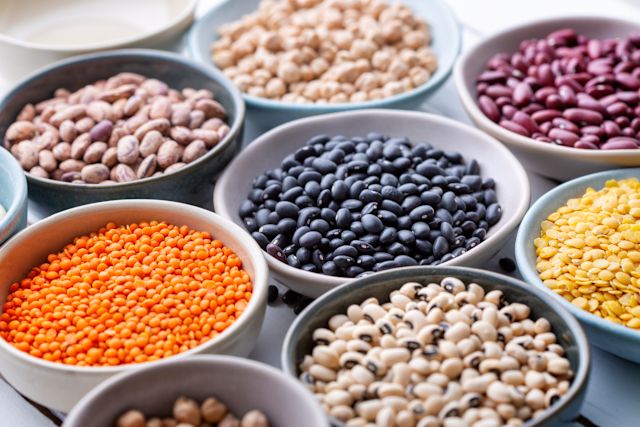
Are you looking for a food that will satisfy your hunger, keep you feeling full throughout the day, and support your health? Try eating more legumes. Members of the legume family include:
- Beans, including black, pinto, red, and white beans
- Chickpeas (garbanzo beans)
- Soybeans (edamame)
- Peas
- Lentils
Legumes are rich sources of fiber, protein, and a range of vitamins and minerals. Including them in your diet may help to reduce the risk of chronic illnesses including heart issues, type 2 diabetes, and even some cancers.
Potential health benefits of legumes
Looking for reasons to eat more beans? Feast on the following.
They can help control weight
Being overweight or obese can contribute to the development of many long-term health conditions. Research suggests that people who eat beans regularly tend to have a lower body mass index (BMI, a measurement of body fat) than people who don’t typically consume beans. Why? It’s partly because legumes are low in calories and contain no saturated fat, too much of which can contribute to weight gain. Their high fiber and protein also helps to keep you feeling fuller for longer, which can help to prevent overeating.
They can help manage cholesterol levels
Beans are rich in fiber; about 60 percent of the daily recommended amount can be found in 1 cup of black beans. Much of that fiber is soluble, meaning it can help to lower your levels of low-density lipoprotein (LDL or “bad” cholesterol), a risk factor for heart disease.
They may help lower diabetes risk
Glycemic load describes how much a food will affect blood sugar levels. Legumes have a low glycemic load, so they can help to regulate blood sugar. Type 2 diabetes occurs when blood sugar is too high.
Aim to consume a total daily glycemic load less than 100; a 1/2 cup of kidney beans has a load of 6. Eating legumes also helps prevent blood sugar spikes, so they provide your body with steady energy.
They may help lower the risk for developing certain cancers
Due partly to their fiber content, there is some evidence that eating legumes may help to reduce the risk of some digestive cancers, particularly colorectal cancer. Beans also contain nutrients, like antioxidants and flavonoids, that could contribute to the lower risk. Antioxidants are substances that help prevent or delay damage to cells in the body, while flavonoids are plant compounds that help to lower inflammation.
Sneak legumes into every meal
The weekly recommended intake of beans, peas, and lentils for most adults is about 1 to 3 cups each week, depending on how many calories you consume each day. Adults in the United States seldom reach these goals. But incorporating legumes into your diet can be simple and tasty. Here's how to eat more:
- Hide black beans in brownies by swapping flour for pureed black beans.
- Garbanzo beans, also called chickpeas, can be blended into a hummus spread and added to a sandwich or used as a dip for veggies.
- Swap 1/2 cup of cooked lentils for your typical protein in your lunchtime salad. They contain only 115 calories and 9 grams of protein and 8 grams of fiber.
- Pea soup makes a hearty meal. You can also puree a cup of peas into your next bowl of pesto.
- Fold plump kidney beans into an omelet instead of using bacon or ham.
Canned and dried beans have similar nutritional profiles, though canned beans often contain slightly more sodium than dried. Too much sodium can raise blood pressure and increase the risk of heart issues. If you are able, opt for dried beans and soak and cook them yourself, or rinse canned beans to remove excess salt.