Will a medical avatar or assistant be more effective for physicians than nurses?
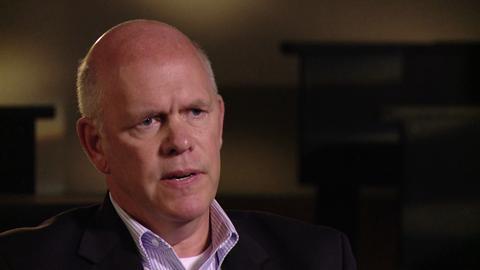
Medical avatars are among the newest advancements in the healthcare industry. William Mobley, MD, PhD, describes how they work and the continuing roles of doctors who use avatars.

Transcript
And by the way, remember, the avatar never sleeps. The avatar is looking at all the patient files 24/7, looking for hits and links and possible meaning
in the pattern of symptoms, the genotypes, the phenotypes that are being collected 24/7,
helping you, the doctor, to know your patients much better than otherwise you would. [MUSIC PLAYING]
It is if the avatar is immensely capable at its job, and immensely inexpensive.
And by the way, remember, the avatar never sleeps. The avatar is looking at all the patient files 24/7, looking for hits and links and possible meaning
in the pattern of symptoms, the genotypes, the phenotypes that are being collected 24/7,
helping you, the doctor, to know your patients much better than otherwise you would. And it's doing it very inexpensively.
Think about the avatar as like the ATM. We don't employ tellers on every street corner 24/7.
To do so would be immensely expensive. But we have these machines called ATMs that everybody uses. In fact, people would probably rather use the ATM now
than go see a teller. So I think it makes sense. Now, the question is, how do we get to the avatar? And we're thinking about this.
It turns out there's great people at UCSD who build avatars. That's their whole thing.
They're in cognitive science. And I've just spoken with one of them. She's a fantastic young woman. And we thought about the following,
we thought about, how about we-- because we're very interested in empathy. We're very interested in the brain, basis of empathy.
How about we do an experiment with medical students where we characterize the body language,
the words that are used, the inflections of the voice that doctors use that are empathetic
or that are judged by empathetic, having a lot of empathy for their patients by themselves, but also, by their patients, and also, by naive observers.
So we might have medical students do meditation class that teaches-- that creates the ability for empathy.
We might watch them interacting with actor patients, and we'd collect, if you will, we'd abstract those features of the behavior that
build real value with a patient, the listening business, the responding business. So imagine we could create this avatar.
We'd equip it with this ability to collect the history, and then, we'd give it a world of information to deal with so when it goes to talk to the doctor,
it's a very well-informed about the patient, and the patient in the context of all the other patients in the world. I can spend a whole half hour only just
listening to the patient. I've collected all that information. I've even analyzed-- my avatar, Joe, has even
analyzed it for me. My job as a human being is to go in and see if Joe got it right, and see if I have any other intuitions,
and to do a brief examination that helps me confirm some of my thinking.
health care




Browse videos by topic categories
A
B
C
D
E
F
G
H
I
J
K
L
M
N
O
P
Q
R
S
T
U
V
W
X
Y
Z
ALL