Dx Dialogues: transcellular and paracellular transport inhibitors for CKD and hyperphosphatemia
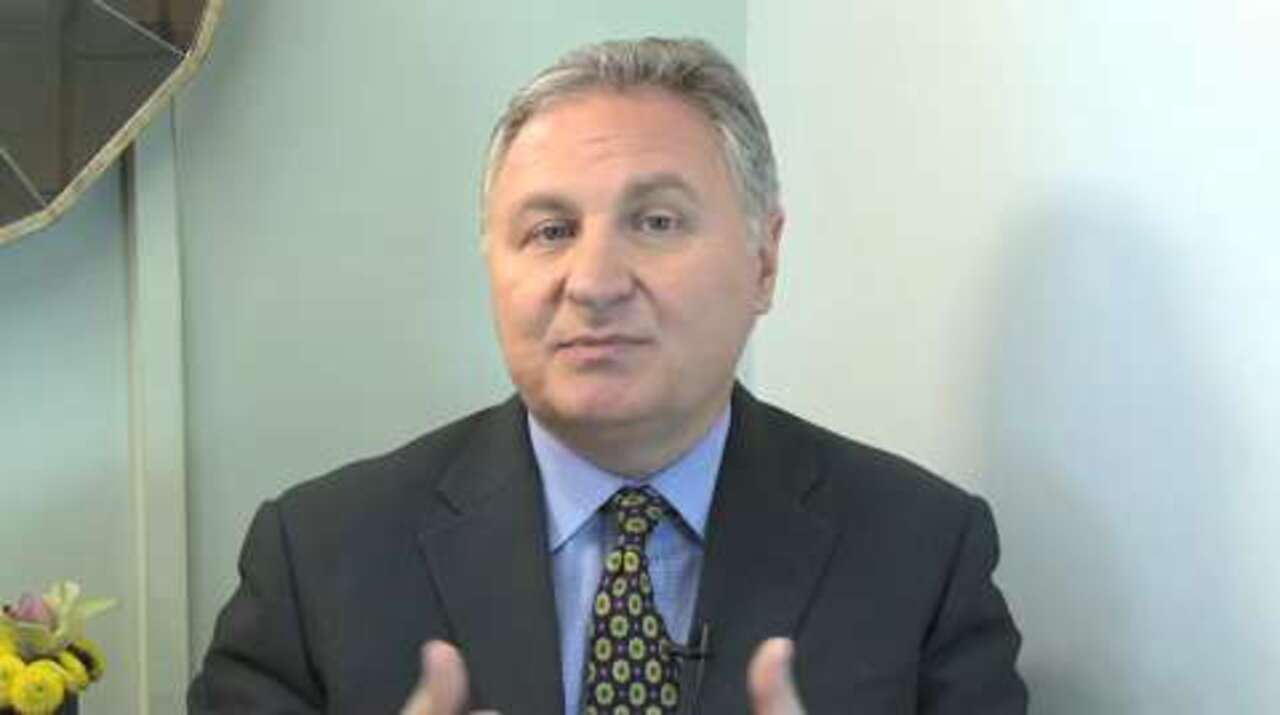
Nephrologist Sean Hashmi, MD, discusses transport inhibitors - the "newer kids on the block" - in the treatment of CKD and hyperphosphatemia.

Transcript
The newer kids on the block, which we call transport inhibitors, these work specifically by inhibiting the gut wall from taking
phosphate inside them. Now, there's two specific pathways.
The first one is what we call the paracellular pathway or next to cells. And the other one is the transcellular pathway,
which is going to be through the cells. So when we talk about the first one, which is drugs names such as tenapanor,
these are NH3 inhibitors. And essentially, what they're doing is they're blocking the pathway in between cells.
And remember, this pathway is going to end up accounting for about 65% to 80% of the absorption.
Then we get into the transcellular pathway. Now, this is specifically referring to NaPi2b.
Now, when we talk about NaPi2b blocking the transcellular pathway, we're looking at essentially getting closer
to about 20% of absorption that's going to end up going in. One of the things that becomes very important to understand
is with chronic phosphate binder use, you actually upregulate the NaPi2b.
The gut is essentially building up more doors to allow for more absorption occurring. And this is why you'll end up seeing some of your patients
plateauing, despite the fact that you continue to increase phosphate binder dosages.
And so these transporter inhibitors, they're going to be able to address this compensation directly. [AUDIO LOGO]
kidney disease failure










Browse videos by topic categories
A
B
C
D
E
F
G
H
I
J
K
L
M
N
O
P
Q
R
S
T
U
V
W
X
Y
Z
ALL