CareView3D: identifying diabetic heart failure early using echo, MRI, and biomarkers
Seth Martin, MD, walks through the methods that clinicians can use to identify DHF early, before ejection fraction drops.

Transcript
We really want to identify diabetic-related heart failure as early as possible. So it's important to be thinking about how we can identify
cardiac dysfunction before it becomes apparent in more kind of gross terms.
So ejection fraction certainly is central to the practice of cardiology. It's central to classification of heart failure.
So it is a very important measure when we look at EF as measured on an echo or other imaging test.
However, it does tend to be a later measure, and so we could miss the opportunity
to make earlier diagnoses of heart failure if we don't look beyond EF. The dial represents ejection fraction,
the proportion of end diastolic volume ejected per contraction. Normal exceeds 50%.
Below 40% defines HFrEF. In diabetes, most patients maintain preserved ejection
fraction where the metric appears reassuring, despite progressive myocardial remodeling.
In diabetic heart failure, ejection fraction often declines late, well after structural and functional
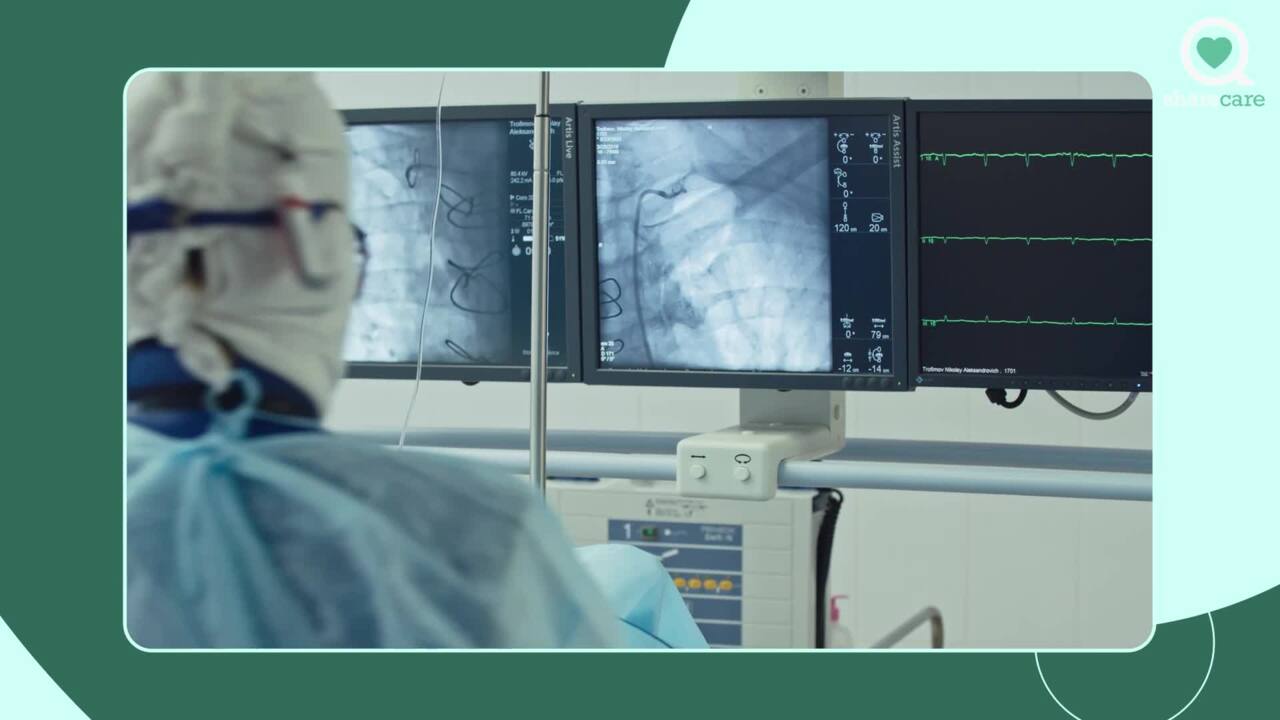
changes have occurred. So in terms of imaging and biomarker tools, of course, echo is central in our practice, but there's
other important imaging techniques, such as MRI, where we can use T1 mapping, as well as biomarkers.
Of course, the most common one that we typically use is BNP or proBNP levels. [AUDIO LOGO]
heart disease











Browse videos by topic categories
A
B
C
D
E
F
G
H
I
J
K
L
M
N
O
P
Q
R
S
T
U
V
W
X
Y
Z
ALL