Unbreakable episode 6: mental power as you age
Renowned orthopedic surgeon, aging and longevity expert, and accomplished author Dr. Vonda Wright on how your mentality can make a difference in how you age.

Transcript
Growing old is not for sissies. [PEACEFUL MUSIC] Sometimes it's hard. And we should just acknowledge that and give ourselves grace.
Estrogen has a profound effect on our mood as well as our brain health.
And when we no longer have it, many of us can experience anxiety that we never had before. We can experience panic and heart palpitations.
And many people describe rage that they had never had. These mental changes that happen in our brain are real.
[UPBEAT MUSIC] Age 30, your brain begins to atrophy.
Atrophy is just a decrease in cell size.
If you feel like you have brain rot, these are five of my favorite hobbies that make me feel better when I've been scrolling too much.
Mental resilience can be built like a muscle. It's called hardiness.
Whether or not we feel in control when we have little roadblocks and can take the next step,
whether or not we're committed to building a great future life, whether or not we are capable of seeing challenges as defeating
or something that we work towards, is all a hardiness/mental attitude shift.
What we can do in midlife when things are getting rough is to remember our successes in life.
You know, maybe we got out of school. Maybe we're raising little people that are great kids. Maybe we've seen some success in our jobs.
Those are all successes that we can remember to give us confidence and mental resilience
as we go forward. You know, it's completely reasonable to look to the future and wonder,
will I be physically strong enough? But also, what will happen to our brain? This is especially true if you're a woman, because 70% of all people with Alzheimer's disease
are women. And so it leaves us with the fear of, what can we do now? What can we do now to prevent that?
Well, there's actually many things that we can do. There's a great researcher named Robbie Brinton who has told us that, when estrogen leaves the house--
or your body-- our brain is literally starving. And that causes profound brain structural changes.
So it only stands to reason, when we lose our estrogen, that our brain would have profound changes. So what do we do about that?
Well, number one, we know that we are capable of making our estrogen replacement decision.
That is really important for optimizing our brain health in the future. Number two, we know that eating an anti-inflammatory diet
with low sugar is great for the brain. But did you know that contracting skeletal muscle
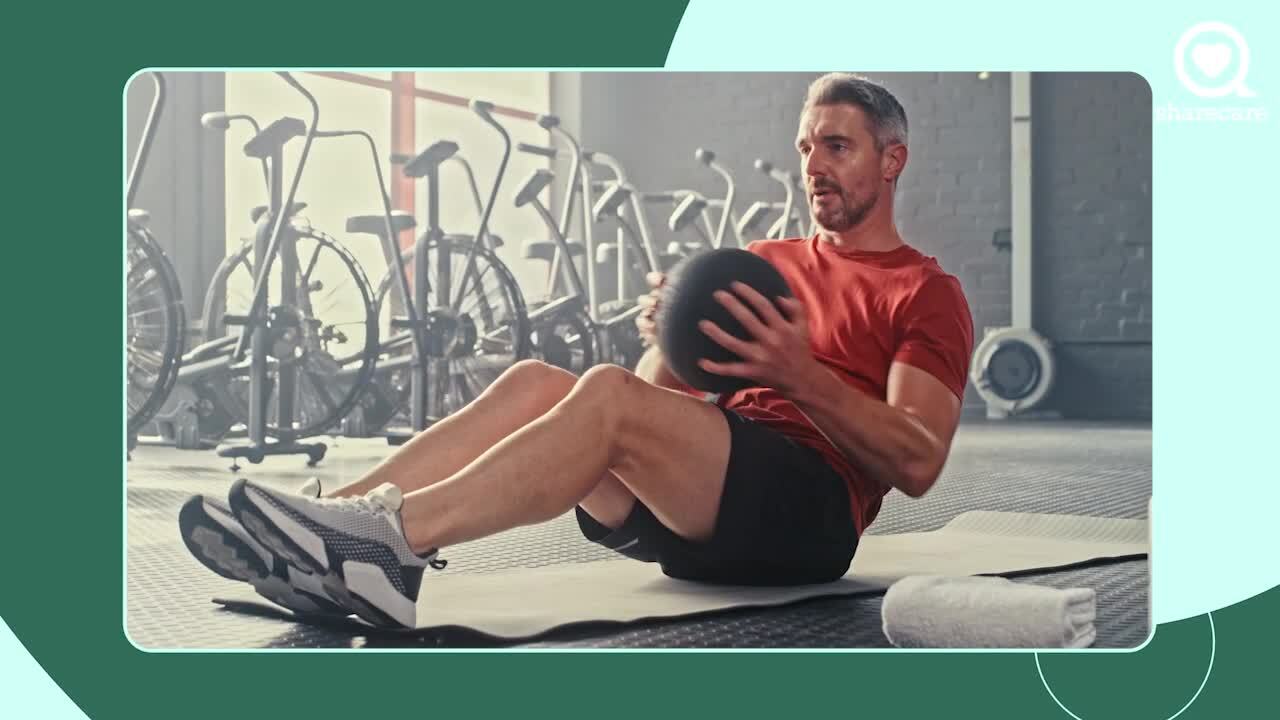
and building better bone helps your brain, through exercise, build more neurons?
We know that cardiovascular exercise increases neuron development in a place called the nucleus ceruleus, which
builds resilience. So just when you think there's nothing you can do to build a better brain, the fact of the matter is
is that there are so many things you can do. [UPBEAT MUSIC]
You know, one of the ways that I worked on my physical and mental resilience-- frankly, mostly mental resilience--
was, a few years ago, starting to do Spartan races. You know, I had avoided crazy things like that
because I didn't want to get hurt. But when I figured out how to get over a 30-foot net, how to scale an 8-foot wall, how to throw a javelin--
which I had never done any of those things before-- it showed me how physically resilient I was. And it reminded me what a mental badass
I am, that I can figure things out. [AUDIO LOGO]
longevity




Browse videos by topic categories
A
B
C
D
E
F
G
H
I
J
K
L
M
N
O
P
Q
R
S
T
U
V
W
X
Y
Z
ALL