4 surprisingly risky everyday foods to limit or avoid
These are probably in your kitchen right now. But that doesn't mean you should eat them.
Updated on July 31, 2025
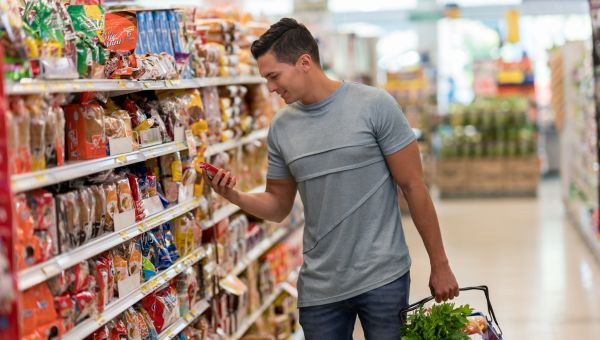
If you’ve ever browsed the supermarket pantry aisle, you’ve probably puzzled over the lengthy, unfamiliar list of ingredients on package labels. Even the most health-conscious shoppers can feel uncertain about which boxed, bagged, canned, and jarred foods to avoid.
To cut through the confusion, focus instead on whole, fresh foods like fruits and vegetables, says Sanjay Bindra, MD, a cardiologist in San Jose, California. Your diet should also include plenty of:
- Nuts and legumes, such as beans and lentils
- Whole grains
- Skinless poultry and fish
- Low fat dairy products
While these foods create the foundation of healthy diet, it’s equally important to be mindful of what to limit. Experts suggest restricting your intake of the following items—or even ditching them altogether.
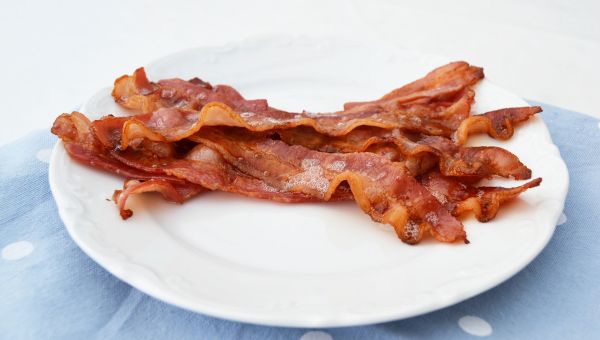
Bacon
Diets high in red and processed meats, such as bacon, are linked to higher rates of obesity, heart disease, and colorectal cancer. In fact, a large 2024 study found that people who ate the most processed meat had a 40 percent higher risk of developing colorectal cancer compared to people who ate the least amount of processed meat. Similarly, eating more red meat was linked to a 30 percent higher risk of colorectal cancer. The results were published in Cancer Epidemiology, Biomarkers & Prevention.
For a savory breakfast side, opt for fresh salsa or cold sliced tomato with olive oil and cracked black pepper instead. Tomatoes contain a chemical called lycopene, which gives the fruit its red color and may help protect against prostate cancer.
Regular and diet soda
Regular soda contains various types of sugar—and some cans may be up to 65 percent fructose. All that sugar can:
- Add to your waistline
- Put you at risk for diabetes
- Promote tooth decay
It also raises your daily calorie intake without providing any real nutrients. Those excess calories can contribute to obesity, which is linked to cancer and heart disease.
But diet soda isn’t a smart swap. Some evidence suggests the artificial sweeteners in diet soda may trigger cravings and make you store calories as fat, rather than burning them. For a fizzy, thirst-quenching alternative, choose iced sparkling water with muddled fruit.
Energy drinks
Having too many of certain energy drinks can send you to the emergency room. These beverages may be marketed as “supplements” to avoid being regulated by the U.S. Food and Drug Administration (FDA), says Dr. Bindra. Supplements don’t have to list their ingredients or nutrition facts and get to sidestep FDA safety testing.
Even when brands market themselves as “sodas” because they want FDA approval, the amount of caffeine, sugar, vitamins, and chemicals in energy drinks can be extreme. Many brands contain 80 to 350 milligrams (mg) of caffeine; the recommended daily limit is 400 mg for healthy adults. Drinking more than one a day could easily lead to heart problems, dizziness, nausea, panic attacks, and more.
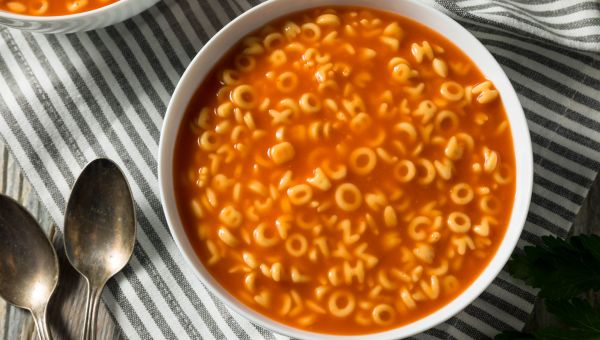
Canned and instant soups
The daily recommended limit for sodium is 2,300 mg for healthy adults. Some people—like those with heart disease—should stick to less than 1,500 mg a day. But with instant soup, it’s possible to slurp up most or all of your day’s allowance for salt in one sitting.
“Canned soups may have 400 mg of sodium or more per cup,” says Bindra. “High sodium intake can raise your blood pressure, cause you to retain fluid, and worsen heart failure symptoms like shortness of breath.”
After a long day, when only a bowl of soup will do, try one of these satisfying, heart-healthy options—just be sure to always choose low-sodium broth when cooking:
Healthy eating tips
For personalized nutrition tips, take Sharecare’s RealAge Test. After asking about your eating, sleeping, exercise habits, and more, the test will determine your RealAge, or an estimate of how your overall health compares to your biological age. Based on that, it will offer advice on how to live your longest, healthiest life possible.
U.S. Department of Health and Human Services. Dietary Guidelines for Americans: 2020-2025. December 2020.
Stern MC, Sanchez Mendez J, et al. Genome-Wide Gene-Environment Interaction Analyses to Understand the Relationship between Red Meat and Processed Meat Intake and Colorectal Cancer Risk. Cancer Epidemiol Biomarkers Prev. 2024 Mar 1;33(3):400-410.
Zara Abrams. Large-scale study explores genetic link between colorectal cancer and meat intake. Keck School of Medicine USC. March 15, 2024.
A Wolk. Potential health hazards of eating red meat. Journal of Internal Medicine. February 2017. Volume 281, Issue 2, Pages 106-122.
Dulińska-Litewka J, Hałubiec P, et al. Recent Progress in Discovering the Role of Carotenoids and Metabolites in Prostatic Physiology and Pathology-A Review-Part II: Carotenoids in the Human Studies. Antioxidants (Basel). 2021 Feb 20;10(2):319.
Kanbay M, Guler B, et al. The Speed of Ingestion of a Sugary Beverage Has an Effect on the Acute Metabolic Response to Fructose. Nutrients. 2021 Jun 2;13(6):1916.
EE Ventura, JN Davis, MI Goran. Sugar content of popular sweetened beverages based on objective laboratory analysis: focus on fructose content.”Obesity (Silver Spring). 2011;19(4):868-874.
Johns Hopkins Medicine. Obesity, Sugar and Heart Health. Accessed July 31, 2025.
Harvard T.H. Chan School of Public Health. Simple Steps to Preventing Diabetes. Accessed July 31, 2025.
University of Illinois at Chicago College of Dentistry. Thinking About Another Sweet Gulp? Think Again. March 24, 2017.
Erma Levy. Diet soda and cancer: What you should know. University of Texas MD Anderson Center. April 9, 2025
M Pearlman, J Obert, L Casey. The Association Between Artificial Sweeteners and Obesity. Current Gastroenterology Reports. 2017;19(12):64. Published November 21, 2017.
Arkansas Heart Hospital. Diet Soda Health Risks: Why We Don’t Offer Diet Sodas At Arkansas Heart Hospital. Accessed July 31, 2025.
UCDavis Health. How do energy drinks affect your health? May 6, 2024.
Martinez KA, Bains S, et al. Sudden cardiac arrest occurring in temporal proximity to consumption of energy drinks. Heart Rhythm. 2024 Jul;21(7):1083-1088.
Mayo Clinic. Caffeine: How much is too much? February 21, 2025.
MedlinePlus. Caffeine Overdose. July 1, 2023.
American Heart Association. How much sodium should I eat per day? July 15, 2025.
Harvard Health Publishing. Sodium, salt, and you. November 2009.
More On


video
article
slideshow


video


video