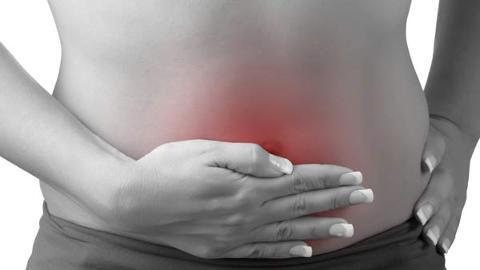
We all want to enjoy the holiday festivities, from the parties at work to family dinners to toasting in the New Year as the ball drops. But after a certain amount of noshing, eating and imbibing at any celebration, you may start to feel uncomfortably full. Surefire signs that you’re in the bloat zone include a swollen belly—whatever you’re wearing suddenly feels like it’s shrunk a size—burping and gassiness. You may also experience sharp pains, stomach cramps, heartburn and even hiccups as your body searches for an escape hatch for the excess gas in your digestive tract. We talked to Nicole Fearing, MD, bariatric and general surgeon at Menorah Medical Center in Overland Park, Kansas, about simple ways to stop stomach bloating before it starts.
1. Slow down
Although you might be eager to chow down on favorite holiday dishes, eating quickly can put you on the fast track to a bloated belly. “A lot of people don’t chew their food as well as they are supposed to, and that means it won’t digest as it should,” says Dr. Fearing. You’ll also swallow more air when you eat fast, which contributes to bloating.
2. Watch portion sizes
It stands to reason that the more you eat, the fuller your belly will be. “Studies show that serving sizes have a lot to do with bloating,” says Fearing. “If you can work on controlling serving size and eating smaller portions you won’t mindlessly eat when you don’t need it.” Fearing also suggests sitting down at parties to eat and serving yourself on a smaller plate.
3. Have a plan
“Bring your own healthy foods and appetizers whenever possible,” says Fearing. “You’ll be less likely to reach for unhealthy foods.” Another strategy? Decide ahead of time how much bread, desserts and alcohol you’ll enjoy. Giving yourself limits puts you in control and gives you a goal to work toward. Keep those limits in mind as you consider seconds at the dessert table. You’re more apt to leave the party without the bloat—or regrets.
4. Avoid food triggers
While we all have different triggers, cruciferous veggies like broccoli and Brussels sprouts are well known for bringing on gassiness. “Most people tend to know what their triggers are,” says Fearing, “but for most people, processed foods and refined sugars are going to be triggers whether they realize it or not.” She adds that if you eat more of these trigger foods than usual or aren’t used to eating them you can be headed toward a bloat attack.
5. Control the bubbly
Champagne, sparkling cider, beer … drink enough of these beverages and it can be the equivalent of blowing up a balloon in your belly. “If you can stay away from carbonation that’s a really good tactic,” says Fearing. “And drink plenty of water. It helps flush your system.”
Medically reviewed in January 2019.