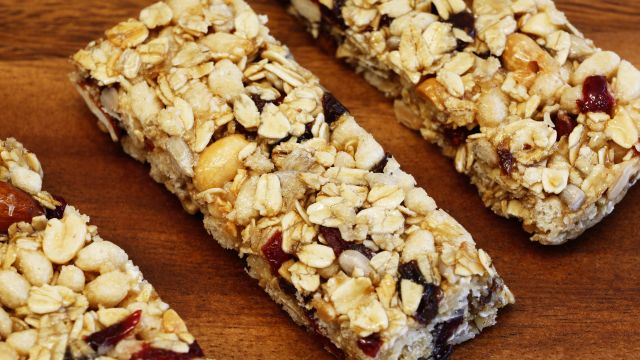
Energy bars, granola bars, snack bars, nutrition bars, diet bars, protein bars, meal-replacement bars . . . whatever you call them, the bar you want depends on what you want it to do for you. The ingredients, calorie counts, fat grams, and vitamin and mineral values are all over the map, so to get what you need, you have to know what to look for. Here's a cheat sheet.
Fuel a Long Workout: Energy bars were originally invented to deliver a massive concentration of carbs to fuel marathoners during a run or replenish them afterward. Yes, you could carry a potato in your pocket, but a bar that's high in complex carbs and fiber (at least 3 grams) will wreak less havoc with your blood sugar, and the benefits will last longer.
Help Build Muscle: First, look for 15 to 35 grams of high-quality protein -- from whey, soy, casein, and/or egg whites -- to give your body the building material needed to repair muscle fibers. Skip bars containing "hydrolyzed proteins" made from mysterious animal parts. Next, check the fat, especially the saturated fat. You want the least sat fat possible, and definitely no more than 3 grams.
Replace a Meal: The built-in calorie and portion control of meal-replacement and diet bars can help you lose weight, say researchers . . . as long as you really do replace one meal with one bar. As for nutrients, most meal bars have plenty of carbs and are usually low in fat, but check their protein: You need 50 grams or more a day, depending on how active you are. Some low-cal meal bars don't have much protein.
Have a Healthy Snack: Think "small is beautiful." A snack bar should be smaller than a meal-replacement bar, and you need to watch the fat and sugar (stay below 18 grams). Steer clear of those made with high fructose corn syrup (HFCS), which brings with it all sorts of health and weight-gain issues. Some snack bars are as calorie-packed as a candy bar.
Medically reviewed in November 2018.