Updated on October 2, 2025.
When you’re traveling, you’re likely thinking about the destination ahead—and perhaps not about the food you’ll eat along the way.
But you can eat on the go without compromising a well-balanced diet built around fruits, veggies, whole grains, and protein. It just takes a bit of planning, says Jessica Gascoigne, MS, RD, a registered dietitian in Washington D.C.
“I think it's really important to try and think ahead,” she says. "If you're able to take five minutes to plan where you're going or the length of time it's going to take to get there, it really will help you choose the right foods."
Pack healthy snacks
Before you hit the road, create a care package for the trip. Start with water, since staying hydrated is important to keeping your energy levels up. A refillable water bottle can help you save money and cut down on waste; if you're flying, just be sure to empty it before heading through airport security.
Then, pull together snacks. Think of healthy items that travel well, such as low-fat string cheese, nut butters, homemade trail mix, fruits, and veggie sticks.
“Try to balance a carbohydrate with a protein while you're traveling, because the protein is going to keep you satisfied longer,” Gascoigne says. Pair an apple with a part-skim string cheese, a graham cracker with 1 tablespoon of peanut butter, or a cup of carrots and celery with 2 tablespoons of hummus for a tasty balance of carbs and protein.
Making healthy choices on the road
It’s okay to stop at a fast-food joint, rest stop, or airport newsstand, since many increasingly offer healthy snacking options. Look for items like pre-packaged hummus with veggies, cheese and crackers, and trail mix. And remember that a piece of whole fruit, such as a banana or apple, is always a wise choice.
Be sure to check nutrition labels as you choose. A good rule of thumb is that a single snack serving should contain roughly 100 to 200 calories and contain fewer than 230 milligrams of sodium. Less than 35 percent of its calories should come from fat.
Beware of added sugars, too. Consider limiting or avoiding snacks that list some type of sugar as one of the first few ingredients. Common forms of sugar include syrups, honey, molasses, cane juice, sucrose, dextrose, and fructose.
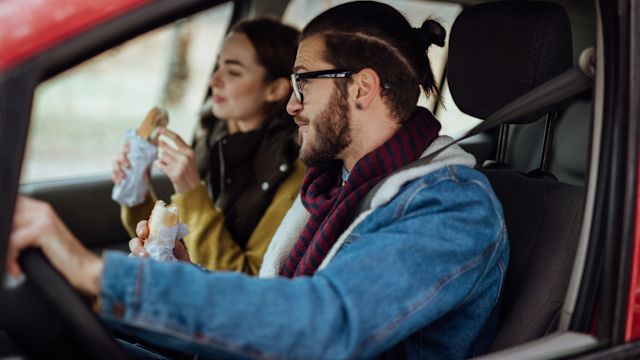
If you opt for drive-through or a fast-food restaurant, steer clear of combination meals listed on the menu. Create your own instead, using these tips:
- Choose sandwiches with grilled meats and fish instead of fried, and pile on extra veggies. Consider asking for extra lettuce, so you can create your own lettuce wrap.
- Many establishments offer salads, fruit cups, sliced apples, and even yogurt. Try making your own parfait, salad, or full meal using these elements. Skip high-fat dressings, cheese, and mayonnaise.
- Choose water or low-fat milk instead of a 12-ounce soda, many of which contain about 135 calories and up to 35 grams of sugar.
- If you need coffee to power through your travels, skip sugary specialty drinks and either bring your own in a thermos or buy a cup of regular coffee. Go easy on sugar and creamer.
- Before placing your order, check the nutritional value of foods, which you can find online. Many restaurants even include calorie counts on their menus.
Remember moderation
Skip super-sizing and avoid family-size snack bags, which make it easy to eat more than you intend. Keep portion size in mind when you reach for road food. “Everything in moderation,” Gascoigne says. “If you really want French fries, get a small order. Or get a small fry and a fruit cup.”