Updated on January 29, 2026.
Have you curbed your use of butter and lard, choosing now to brown, sauté, and bake with corn or vegetable oil? Many of us rest easy in the knowledge that as long as we eat mostly the healthy kinds of fat—meaning unsaturated fats—our hearts are probably in the clear, right?
Well, there’s more to the story. Merely switching to unsaturated fats is not the only key to healthful fat consumption. Research shows you need different kinds of unsaturated fats. Here’s the lowdown.
The facts on fats
As with other foods, if you are eating too much fat, regardless of the kind, and you are not expending a similar number of calories, you risk weight gain and its related health complications.
But there are many good things fat can do for you. Dietary fats are needed to maintain energy levels and provide the body with essential fatty acids it cannot produce on its own. They help you absorb nutrients, make foods tastier, and satisfy you after eating. They also assist the body in the production of substances needed for immune function, tissue repair, and prostaglandin production. Prostaglandins are hormone-like compounds. The body produces them to help manage blood pressure and other important functions.
So, fat is part of a healthful diet. But it’s important to know what kind you are eating.
Saturated fats primarily come from animal products like meat and butter. Eating too much food that’s high in saturated fat may raise your cholesterol and increase your risk for cardiovascular (heart and blood vessel) problems. Unsaturated fats are heart-healthy fats. There are two kinds—monounsaturated and polyunsaturated—both of which can benefit your health.
Q: Which snack contains mostly unsaturated fats?
- Peanut butter on a banana
- A couple of olives
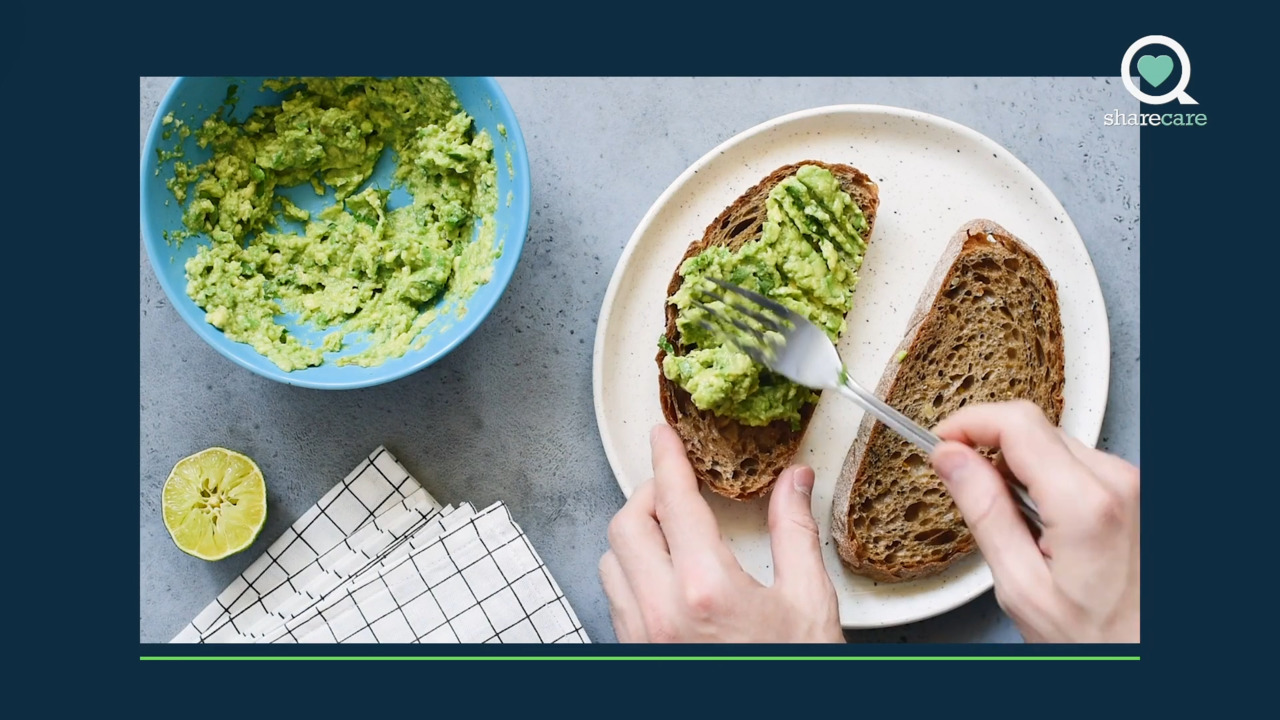
- Avocado toast
- A handful of walnuts
- All of the above
A: All of the above
Nuts, seeds, olives, and avocado are low in saturated fat and high in unsaturated fat. Walnuts are also high in omega-3 fatty acids, a type of polyunsaturated fat. Along with omega-6 fatty acids, another kind of polyunsaturated fat, omega-3s play a key role in keeping you healthy.
Since your body doesn’t make omega-3 fatty acids, you have to get them from foods like flax seeds, chia seeds, and walnuts.
Q: You’re looking to add a dose of healthy omega-3 fats to your diet today. What should you do?
- Drizzle your salad with a dressing made with olive oil
- Snack on a serving of popcorn popped in safflower oil
- Have a serving of wild salmon at lunch or dinner
A: Have a serving of wild salmon at lunch or dinner
Oily fish from cold-water climates, such as salmon, are typically good sources of omega-3 fats. Safflower oil is rich in omega-6 fats. Olive oil is an excellent source of monounsaturated fats that also plays a role in defending against cardiovascular disease but contains very little omega-3.
Keep in mind that omega-3 levels can vary greatly in fish depending upon where the fish comes from. It’s often difficult to know exactly how much omega-3 fats fish contain, regardless of whether it’s wild or farmed. Also, before you choose your fish, find out the typical methylmercury levels for various fish from the United States Food & Drug Administration.
Where can you find monounsaturated fat?
Monounsaturated fat remains one of your best choices when it comes to including fat in your diet.
Q: You're sautéing vegetables to eat with your dinner. Which of the following unsaturated fat sources is a good choice?
- Canola oil
- Olive oil
- Sunflower oil
- Any of the above
A: Any of the above
Olive, sunflower, and canola oil all have higher amounts of monounsaturated fat compared to other foods and oils. Of the three, safflower oil has the highest amount of monounsaturated fats per 100 gram serving (71.6 grams), followed by extra virgin olive oil (69.2 grams) and canola oil (62.6 grams).
The right amount of saturated fat
The body needs a small amount of saturated fat for everyday function—but not too much. The American Heart Association recommends keeping saturated fat below 6 percent of your total daily calories. That means a person eating 2,000 calories each day should have no more than about 13 grams. (One gram of fat is 9 calories.)
Two tablespoons of butter contain roughly 14 grams. But saturated fat comes from other food sources, too. These include meat, baked goods, and whole dairy products like full-fat cheese. So, when you're tracking your daily intake, remember to consider all foods that contain saturated fat.
If you need to cut back on saturated fat or total fat intake, stick to non-fat substitutions for omega-6-rich fats. For example, whole-fruit spread can replace margarine. And whenever you bake, find healthier substitutions for oil and butter, such as fruit purees or yogurt.