Why anxiety around COVID-19 is contagious
Anxiety and panic are both born from fear and fear is a survival mechanism. Jud Brewer, MD PhD, explains what's happening in our brain related to anxiety and how it is contagious.

Transcript
JUD BREWER: Anxiety Gone Viral-- why fear and uncertainty spread anxiety through social contagion and how to protect yourself.
Anxiety is a strange beast. As a psychiatrist, I've learned that anxiety and its close cousin panic are both born from fear.
As a behavioral neuroscientist, I know that fear's mean evolutionary function is helping us survive.
In fact, fear is the oldest survival mechanism we've got. Fear helps us learn to avoid dangerous situations
in the future through a process called negative reinforcement. For example, if we step out into a busy street, turn our head,
and see a car coming right at us, we instinctively jump back onto the safety of the sidewalk.
Evolution made this really simple for us, so simple that we only need three elements in situations like this
to learn-- an environmental cue, a behavior, and a result. In this case, walking up to a busy street
cues us to look both ways before crossing. The result of not getting killed helps us remember to repeat the action again in the future.
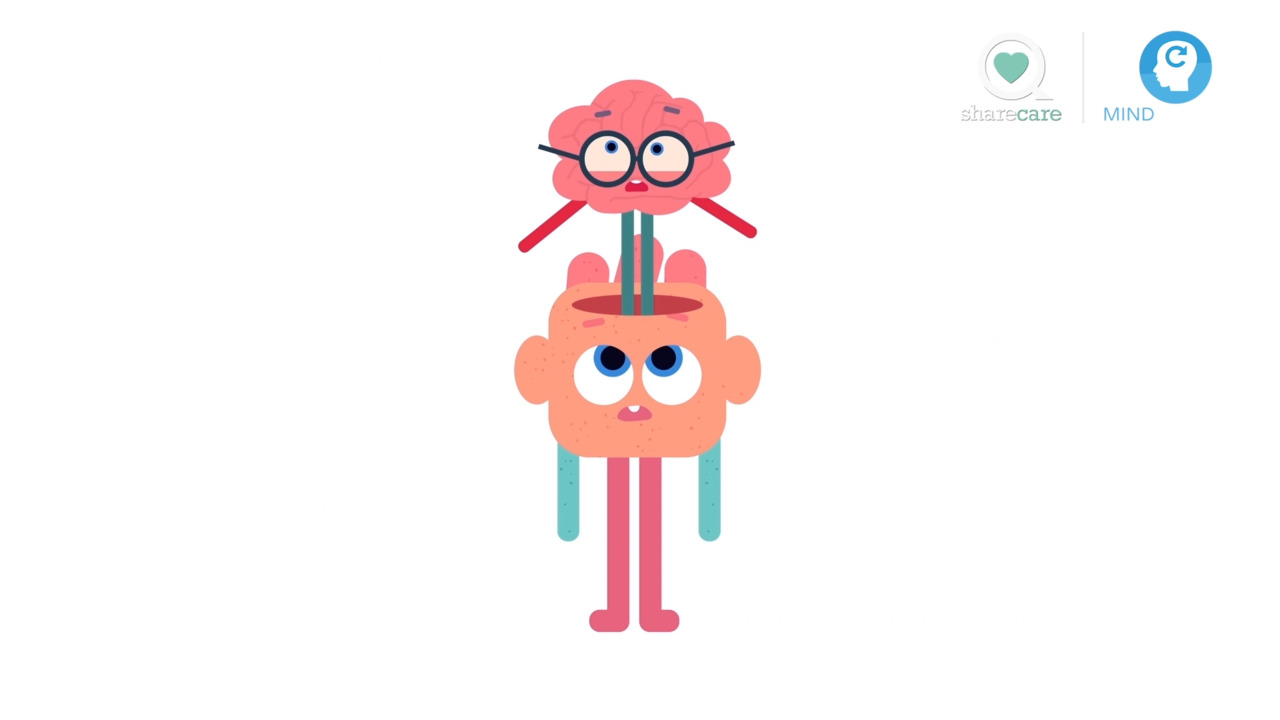
Sometime in the last million years, humans evolved a new layer on top of our more primitive survival brain
called the prefrontal cortex. Involved in creativity and planning, the prefrontal cortex helps us think and plan for the future.
It predicts what will happen in the future based on past experience. If we don't have enough information,
our prefrontal cortex lays out different scenarios about what might happen next and guesses which will be most likely.
It does this by running simulations based on previous events that are most similar. Enter anxiety.
Anxiety is defined as a feeling of worry, nervousness, or unease, typically about an imminent event or something
with an uncertain outcome. Anxiety comes up when our prefrontal cortices don't have enough information to accurately predict the future.
We saw this with the novel coronavirus that was discovered in China at the end of 2019, COVID-19.
Scientists race to study the characteristics of any new virus so that we can know precisely how contagious and deadly it is and act accordingly.
Uncertainty abounds. Without accurate information, it is easy for our brains to spin stories of fear and dread.
In addition to being fueled by uncertainty, anxiety is also contagious. In psychology, the spread of emotion
from one person to another is termed social contagion. Our own anxiety can be cued or triggered simply
by talking to someone else who is anxious. Their fearful words are like a sneeze lending directly on our brain, emotionally infecting
our prefrontal cortex and sending it out of control as it worries about everything from whether our family
members will get sick to how our jobs will be affected. Wall Street is a great example of social contagion.
We watched the stock market spike and crash, the stock indices being a thermometer for how feverish our collective anxiety is at any one moment.
Wall Street even has something known as the fear index, which with coronavirus outstripped the financial meltdown of 2008.
When we can't control our anxiety, that emotional fever spikes into panic. Panic is defined as sudden, uncontrollable fear or anxiety,
often causing wildly unthinking behavior. Overwhelmed by uncertainty and fear of the future,
the rational thinking parts of our brains go offline when we're panicked. Logically, we know that we don't need a six month
supply of toilet paper. But when we see someone else's cart piled high, their anxiety infects us, and we go into survival mode.
So how do we not panic? Too many times I've seen my anxious clinic patients try to suppress or think themselves out of anxiety.
Unfortunately, both willpower and reasoning rely on the prefrontal cortex, which isn't available at these critical moments.
Instead, I start by teaching them how their brain works so that they can see how uncertainty weakens the brain's ability to deal with stress,
priming it for anxiety when fear hits. But this is only the first step. To hack our brains and break the anxiety cycle,
we need to become aware of two things-- one, that we are getting anxious or panicking, and two,
what the result is. This helps us see if our behavior is actually helping us survive or, in fact, moving us
in the opposite direction. Panic can lead to impulsive behaviors that are dangerous, and anxiety has near- and long-term consequences,
both mentally and physically. Once we are aware of how unrewarding anxiety is,
we can then deliberately bring in the bigger, better offer. Since our brains will choose more rewarding behaviors simply
because they feel better, we can practice replacing old habitual behaviors, such as worry, with those that are naturally more rewarding.
These are the bigger, better offers. For example, if we notice that we have a habit of touching our face,
we can be on the lookout for when we act out that behavior. At that moment, we can step back and notice
if we're starting to worry. Oh no, I touched my face. Maybe I'll catch something. And instead of panicking, we can take a deep breath
and ask ourselves when was the last time I cleaned my hands? Just by taking a moment to pause and ask the question,
we give our prefrontal cortex a chance to come back online and do what it does best-- think. Oh, right, I just washed my hands.
Here, we can leverage certainty. If we've just washed our hands and haven't been out in public,
the likelihood that we're going to get sick is pretty low. The more we can see the positive feeling and effects of good hygiene and compare them to the negative feeling
of uncertainty or getting caught up in anxiety, the more our brains naturally move toward the former
because it feels better. They naturally choose the bigger, better offer. How do I know this?
My lab has studied these mechanisms for decades. We've recently found that simple mindfulness training delivered
through an app called Unwinding Anxiety can reduce anxiety by 57% in a study that we did with anxious physicians.
In a second study with people with generalized anxiety disorder, we saw that anxiety went down by 63% in just a couple of months.
Understanding these simple learning mechanisms will help all of us keep calm and carry on, which is how London dealt with the uncertainty of constant air
raids in World War II. As we keep calm and carry on, this helps us keep from getting caught in anxiety or panic
whenever we face uncertainty. When our prefrontal cortex comes back online, we can compare anxiety to what it feels like to be calm.
To our brains, it's a no-brainer. It simply takes a little practice so that the bigger, better offer becomes our new habit.
coronavirus

Browse videos by topic categories
A
B
C
D
E
F
G
H
I
J
K
L
M
N
O
P
Q
R
S
T
U
V
W
X
Y
Z
ALL