Just how important is stretching?
"Super important," says Wendy Batts, MS, a regional master instructor for the National Academy of Sports Medicine. That's why flexibility exercises—like yoga, tai chi, and Pilates—are a great fit if your joints tend to be achy or stiff. Not only can these low-impact routines loosen things up, they can tone your supporting muscles and help keep you injury-free.
Stretch out with yoga
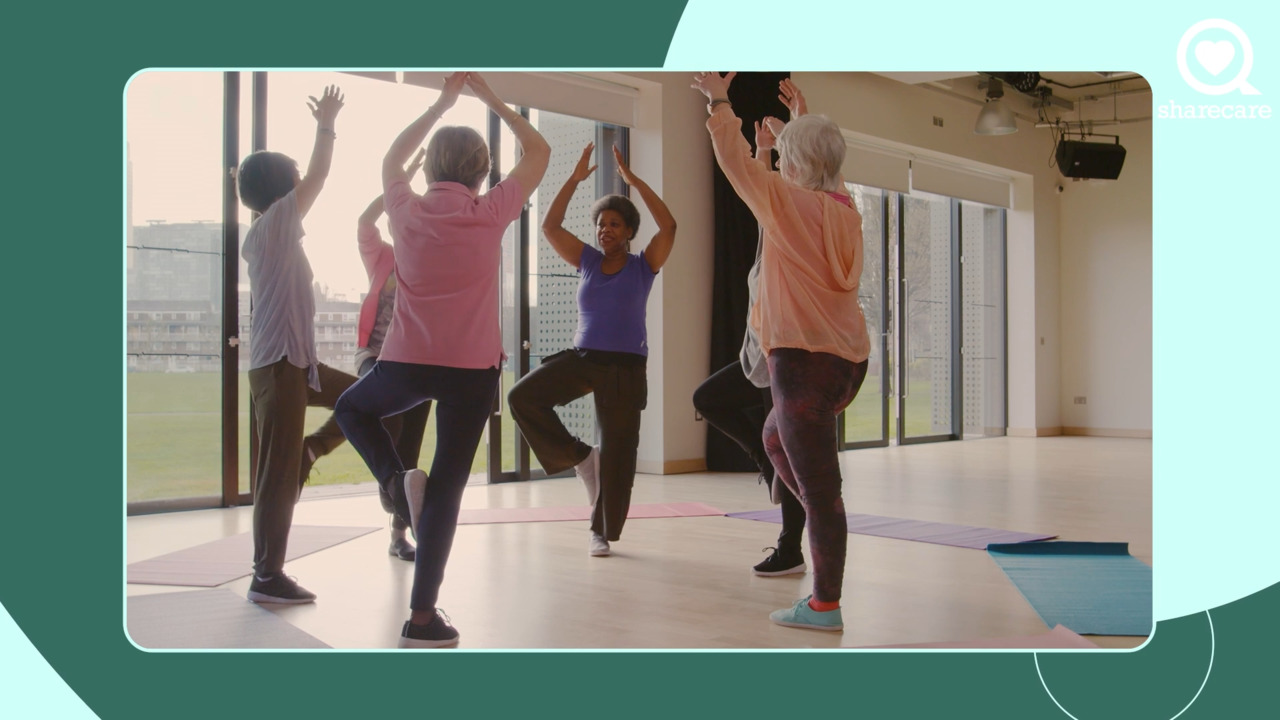
If you're looking for a gentle exercise that boosts flexibility and relaxes your mind, yoga is the way to go. While it may seem like a recent trend, yoga originated in India thousands of years ago and now has many different styles for all fitness levels. The exercise involves a series of stretching positions that are held for a few seconds or minutes, with a focus on breathing and some meditation.
"One of the greatest things about yoga is that it helps lengthen muscles that are extremely tight from being in a short position all day, such as your hip flexors from sitting," says Batts.
Look for a yoga studio that offers classes for beginners, or find classes at your local community center. Many classes cater to people with joint pain or limited mobility. You can also find videos online for convenient, everyday practice. Just be sure to create a safe, clear space if you're practicing at home by yourself.
Slow down with tai chi
If you want something a little more fluid, tai chi might be for you. This Chinese martial art form was designed to improve the flow of energy, or chi, through the body. The pauses and holds in tai chi are shorter than in yoga, so as you slowly move from one relaxed pose to the next, there's less stress on your joints. Like yoga, tai chi also promotes meditation and breathing to help bring awareness to your body as you improve flexibility, strength, and balance.
You can find tai chi videos online, but the best way to learn is from a local instructor. A qualified instructor can guide you through poses that are safe for your joints. You'll also get the benefit of group practice, which can lend emotional support.
Build up with pilates
If you want to take things up a notch, consider Pilates. It's another low-impact exercise that involves slow, controlled movements to improve posture and flexibility without stressing joints.
"The exercise lengthens and stretches muscles, but also places a greater emphasis on building your core strength compared to yoga," Batts explains. Doing Pilates regularly can strengthen your abs, back, and other muscles in your core, which can give you the stability to try other exercise programs down the road.
Before you begin
Even though yoga, tai chi, and Pilates are all considered gentle forms of exercise, it's important to learn the correct techniques before you practice them on your own.
"A lot of times people overstretch a muscle and then they get injured," says Batts. "If you start to feel pain during exercise—joint pain, not muscle fatigue, which is normal when beginning a program—then something isn't right and you should stop. The movement or stretch may be too advanced."
As with any exercise program, check with your healthcare provider before you start. These gentle exercises should be gradually added to your daily life, not replace any treatments your provider has recommended.