Updated on September 29, 2025.
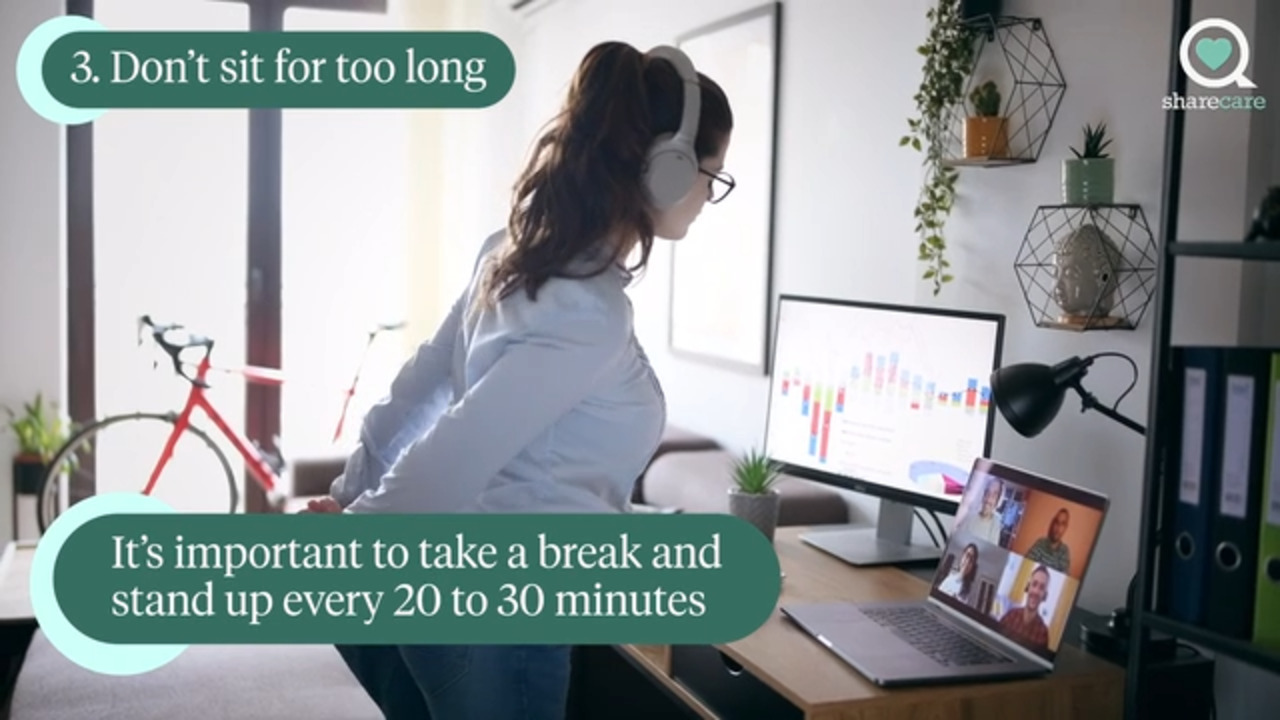
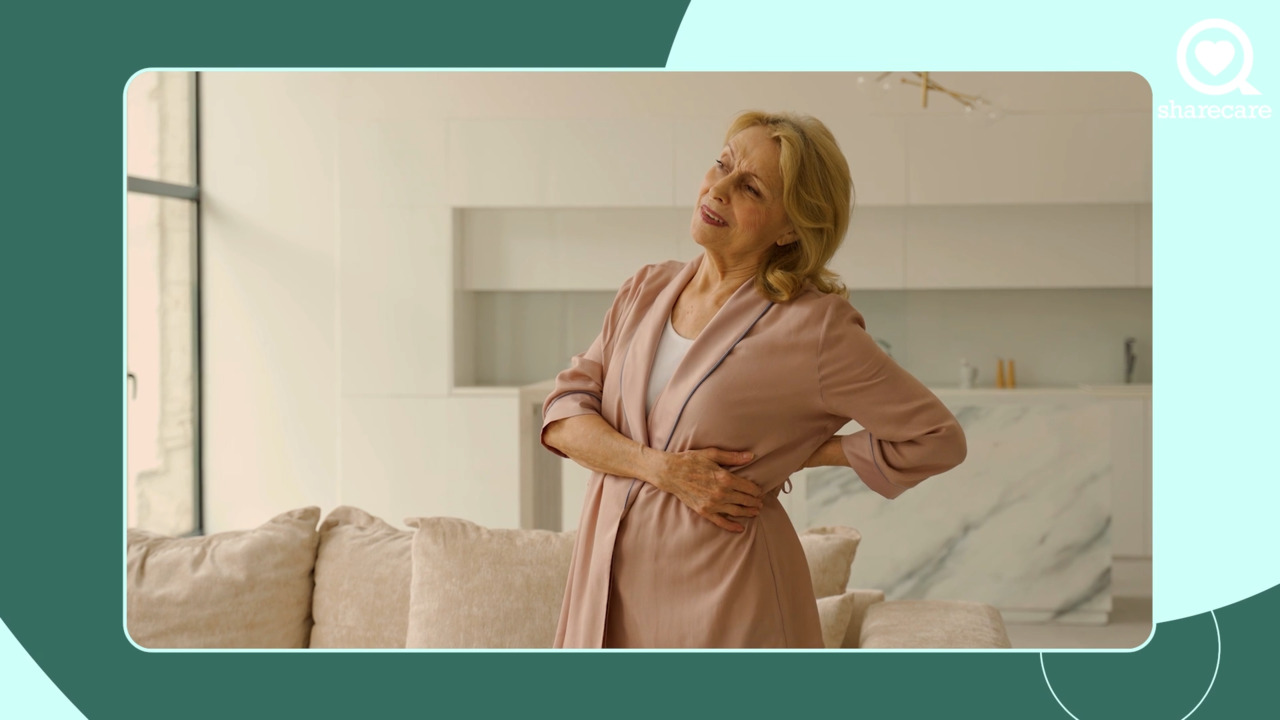
In an age of constant digital connection and late-night scrolling, you may be no stranger to neck pain. Technically dubbed trapezius myalgia, neck pain is a common complaint of people who use phones, tablets, smartphones, and computers. Office workers are among those who are particularly prone.
Beyond reducing your screen time, here’s what might make it feel better: strength training. Research shows that toning and strengthening problem areas may be an effective way to keep your neck feeling loose and less sore. Exercise-based therapies—especially strengthening exercises of the neck, shoulder, and shoulder blades—have been tied to reduction in short-term pain.
Talk to a healthcare provider
If your trapezius is troubling you, don't trot off to the gym just yet. First, speak with a healthcare provider (HCP) to make sure what you're experiencing is simple neck pain and not something more serious. Then, you can decide together what the best treatment is for your case.
If your pain is related to electronics use, strength training may be the right path. But you should discuss with your HCP about what kinds of exercises might make sense for you, as well as how often you should do them. Your HCP will also likely want to discuss your posture. Poor posture can contribute greatly to neck pain—and the success of your strength training may depend on first correcting it.
Solutions for your aching neck
If you receive the okay, here are some examples of strength-training moves that may effectively help to limit neck pain.
One-arm rows
To do a one-arm row, find a bench or similarly long, flat, elevated surface. Grab a dumbbell with your right hand and place your left knee/calf on the bench lengthwise. Bend over and place your left hand on the bench to support yourself. Your back at this point should be straight, parallel with the bench.
Keeping your right foot on the floor, extend your right arm (holding the dumbbell) towards the floor. Lift it up, bringing your right elbow up level with your back. Then return to your starting position. Make sure not to rotate your body. Repeat. When you’re finished with your routine, switch sides.
Upright rows
Stand straight with feet shoulder-width apart. Hang your arms downward. Hold one dumbbell in each hand or use a single barbell and hold it in both hands, parallel to the floor. Making sure to bend your elbows outward, slowly bring the weight(s) upward to chest height. Slowly return to your starting position. Repeat.
One-arm reverse flys
Stand straight with feet shoulder-width apart. Hold one dumbbell in each hand. Bend your knees slightly and move your hips backward. As you’re doing this, bend forward so your chest is almost, but not quite parallel to the floor. (You may look a bit like a chicken.) Hang your arms downward. With your elbow bent slightly, bring the dumbbell in your right hand outward and up, as if you were a bird flapping its wing. Keep raising it until your arm is parallel to the floor. Slowly return to position. Repeat, making sure to exercise both arms equally.
One-arm lateral raises
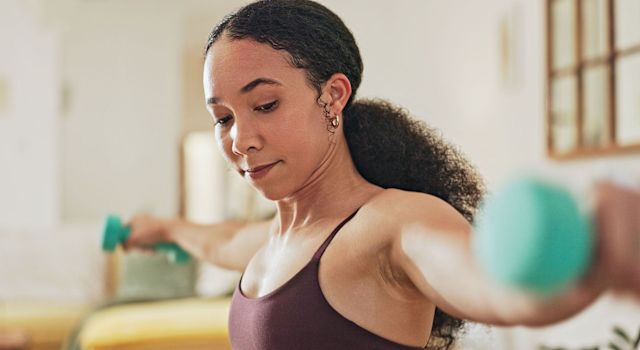
Stand straight with feet shoulder-width apart. Hold one dumbbell in each hand. Keeping your right arm relatively straight, lift it outward, away from your side, until your arm is parallel to the floor, as if you were a bird flapping its wing. Slowly return to the starting position, making sure to exercise both arms equally.