Updated on November 7, 2025.
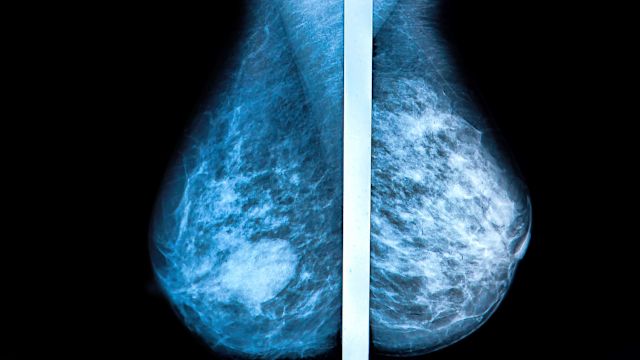
Mammograms are the best tests doctors have to find breast cancer. These X-ray pictures can help detect changes in breast tissue early on—up to three years before they can be felt.
Mammogram results are usually received within a few weeks, although the timing may vary from one facility to the next. One important finding on mammography reports is breast density—the ratio of fatty tissue to fibrous or glandular tissue. Those with mostly fibrous or glandular tissue (about 50 percent of women age 40 and older) have dense breasts, increasing their risk for developing breast cancer.
To help find and treat breast cancers as early as possible, the United States Food and Drug Administration (FDA) now requires mammography facilities to notify patients about the density of their breasts. Issued in 2023, the updated regulations were intended to strengthen the FDA’s oversight of these facilities and improve how mammograms are categorized and assessed by healthcare providers.
What is dense breast tissue?
For some, mammography results may be confusing. Some studies have found that many women who receive notification that they have dense breast tissue don’t know what it means. They may also interpret mammogram results in ways that are different than the medical explanation.
Breasts are made up of fibrous tissue, which affects the size and shape of your breast and glandular tissue that produces milk. They also contain fatty connective tissue, as well as ducts that carry milk to the nipple. Dense breasts have more of this fibrous and glandular tissue than fat, but there are some other factors that contribute to breast density.
A person’s age, menopausal status, genetics, hormone use, menstrual cycle, chemotherapy treatments, reproductive history, and body mass index (BMI) may all play a role.
How to interpret mammogram results
Breast density can only be seen through a mammogram. Mammography facilities are required to provide dense breast notifications (DBN) after a mammogram if dense breast tissue is detected. Many states also require that insurance cover any additional imaging tests like ultrasounds for people with dense breasts.
There are various density categories, according to the American College of Radiology, and they are classified into these four groups in the Breast Imaging Reporting and Data System (BI-RADS), or breast cancer and density risk results from your mammogram:
A: Breasts are almost all fatty tissue, occurs in 10 percent of women
B: Breasts have dispersed areas of dense glandular and fibrous tissue, occurs in 40 percent of women
C: Breasts are mostly dense glandular and fibrous tissue, which can interfere with the detection of small tumors, occurs in 40 percent of women
D: Breasts are very dense, which makes tumor detection within the tissue hard to spot, occurs in 10 percent of women
Your breasts are classified as dense if you have a C or D diagnosis.
Mammogram reports will also include BI-RADS results on cancer risk and density. Most breast density reports will use the A to D labeling system above. The language used in reports is required by law, and according to the American Cancer Society, usually reads something like this:
“Your mammogram shows that your breast tissue is dense. Dense breast tissue is common and is not abnormal. However, dense breast tissue can make it harder to evaluate the results of your mammogram and may also be associated with an increased risk of breast cancer. This information about the results of your mammogram is given to you so you will be informed when you talk with your doctor. Together, you can decide which screening options are right for you. A report of your results was sent to your primary physician.”
How dense breasts affect cancer risk
Regardless of the state you live in or your breast density, your radiologist will compile your mammogram results using the BI-RADS. This report classifies your breast cancer risk into the following categories:
0: Additional information is needed
1: Negative
2: Benign
3: Probably benign
4: Suspicious abnormality
5: Highlight suggestive malignancy
6: Biopsy-proven malignancy
Dense breast tissue is very common, and although research shows that dense breast tissue may be linked to a slightly higher risk of breast cancer, the reason is not completely understood.
Because breast tissue looks white, as do masses and tumors, it’s possible that dense breast tissue can prevent radiologists from detecting cancer during mammograms. As a result, your mammogram may not be as accurate as it would be if you had more fatty tissue.
What to do if you have dense breasts
While dense breast tissue is an individual risk factor for cancer, it’s not associated with a higher risk of dying from breast cancer when compared to people with breast cancer and fatty tissue.
If you have dense breast tissue, it’s important to talk with your healthcare provider about what this means, how your dense breast tissue affects your breast cancer risk, and whether other screening options like ultrasounds or magnetic resonance imaging tests are appropriate for you.