What is sickle cell disease?
Sickle cell disease results from a hemoglobin mutation. In this video, HealthMaker Gary Gibbons, MD, director of the National Heart, Lung, and Blood Institute, describes why sickle cell disease is so debilitating.

Transcript
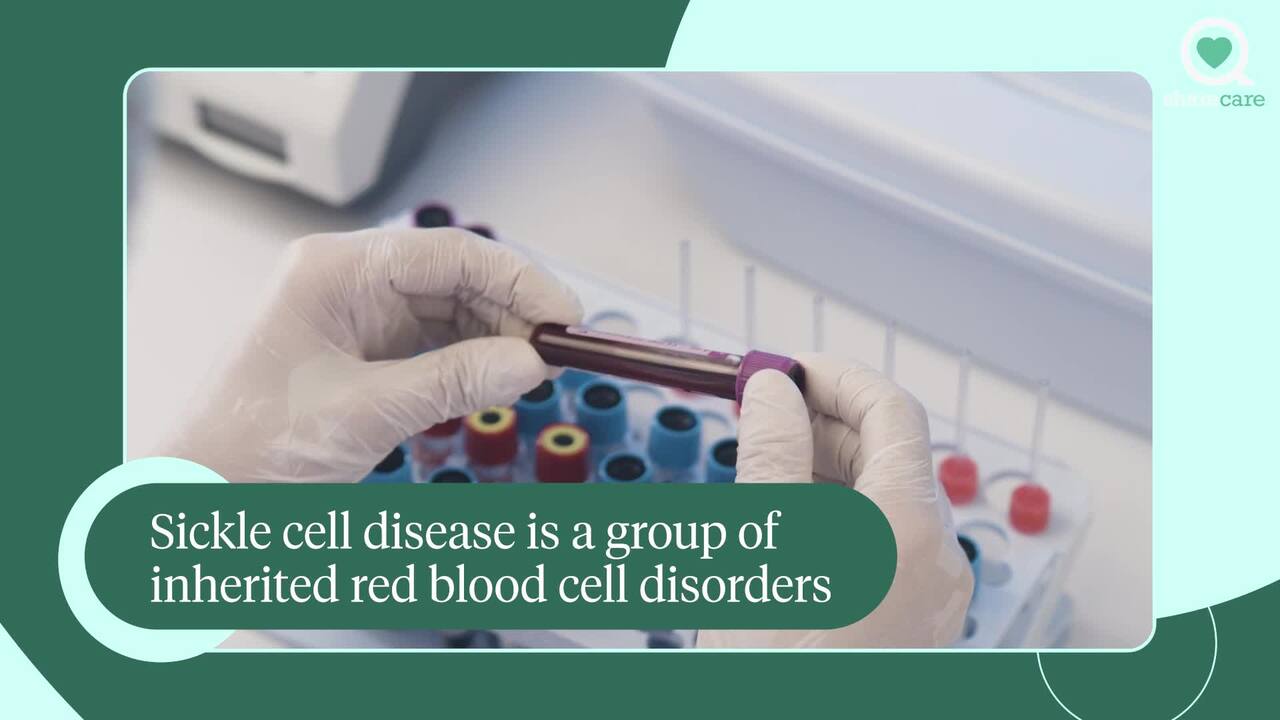
Sickle cell disease is a heritable disorder passed on from parent to child that relates to a mutation in a protein called hemoglobin.
It actually gives red blood cells-- blood-- its red color. [MUSIC PLAYING]
It's critical in carrying oxygen to all the tissues in your body. Sickle cell disease individuals who have a mutation, a misspelling, of that gene
and have an abnormal hemoglobin actually causes the red blood cell to sickle, have this curved shape instead
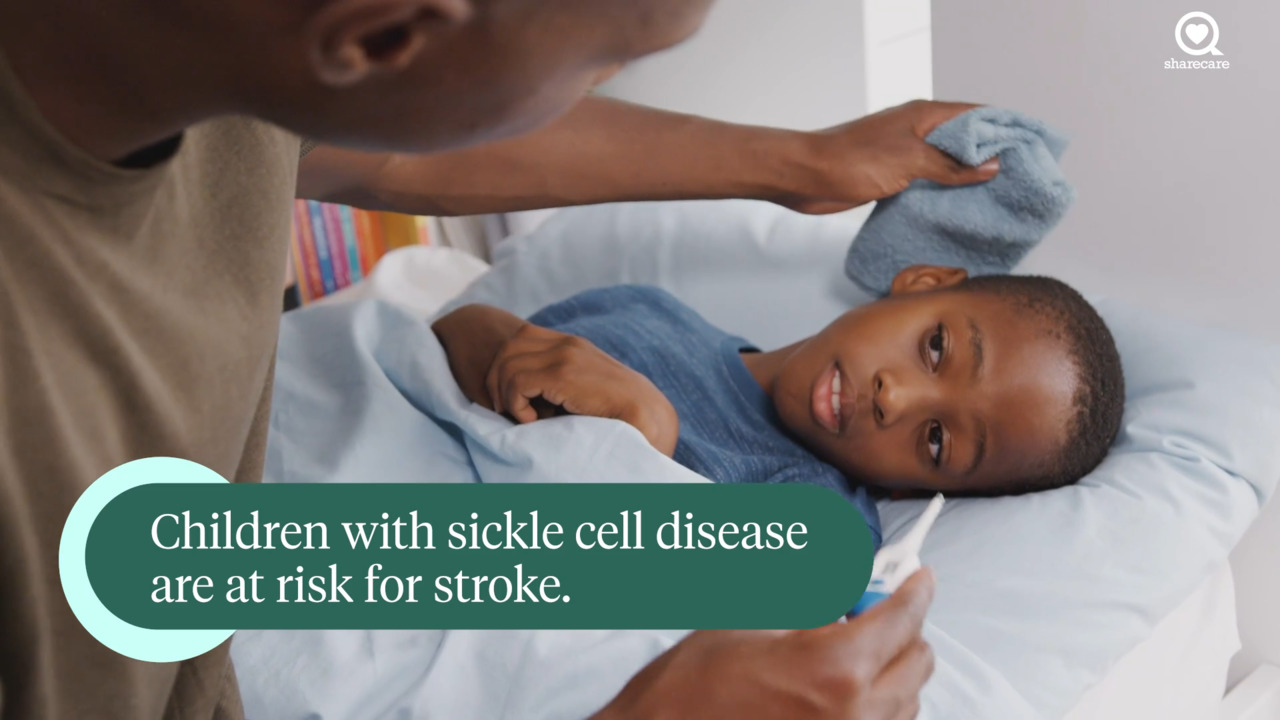
of the normal discoid shape. As a result, it causes complications in which, for example, a child with sickle cell disease
is at risk of a stroke. You're used to thinking about a 77-year-old having a stroke. Sickle cell-- a seven-year-old could have a stroke.
Maybe 1 in 5 children may show evidence of a stroke on a head scan.
So this can be a devastating disorder, affect literally every organ in the body, complications affecting the heart, the lung, the kidney,
and the bones. And so a big problem, affecting millions of individuals
all over the world-- no race ancestry group is spared, though it does predominantly have
an impact in sub-Saharan Africa where malaria is endemic. And indeed, it probably was selected for because those who
are just carriers, who have sickle cell trait-- just one normal copy and one mutated copy-- were actually protected from the effects of malaria.
And so that's why it probably became more prevalent. But then, for example, African-Americans in this country who are no longer exposed
to malaria, again, and then developed the two copies of this mutation, have this disorder
with all its devastating complications. [AUDIO LOGO]
sickle cell anemia



Browse videos by topic categories
A
B
C
D
E
F
G
H
I
J
K
L
M
N
O
P
Q
R
S
T
U
V
W
X
Y
Z
ALL