Women moving forward together
In our final episode of 51%, we hear from political and workplace experts about women’s roles in politics, society, and the workplace.

Transcript
[MUSIC PLAYING]
What's the best piece of advice I've ever gotten? Advocate for yourself, brag about yourself,
be that voice for yourself. Never give up. Keep your head up. Keep the faith. Keep going. I've learned through my own struggle, through my own pain.
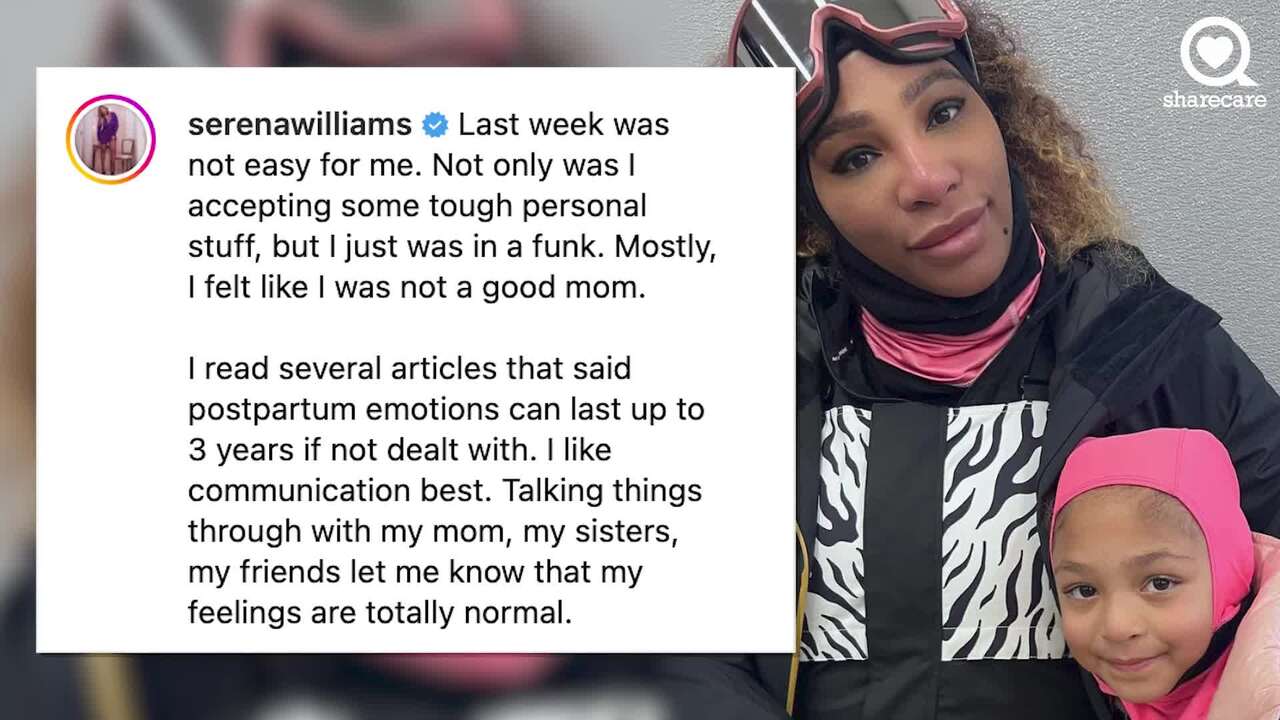
We are human. Our children are human. And we deserve to be treated as such. Own the fact that I needed support with my mental health.
Have the right people in your circle. Make such a huge difference. [MUSIC PLAYING]
Hi, Barbie. Hi, Barbie.
Turn to the Barbie next to you. Tell her how much you love her. Compliment her. [MUSIC PLAYING]
I'm a young brown daughter of immigrants, short. Grew up overweight and poor.
I had no access to this narrative. And something has shifted enough,
where there's now space for somebody like me in that story. [MUSIC PLAYING]
I knew and Margo knew, and all the actors knew, that what we wanted at the center of it was just a really big heart.
And part of it was so important for me that however anarchic or crazy, or throwing elbows
the movie was, the thing that you walk away with was this feeling of this heart in the middle of it.
OK, ladies, let's do this. [MUSIC PLAYING] The definition of imposter syndrome
is doubting your abilities and feeling like a fraud. [MUSIC PLAYING]
It's sort of that internal feeling of not being good enough, being in a position where
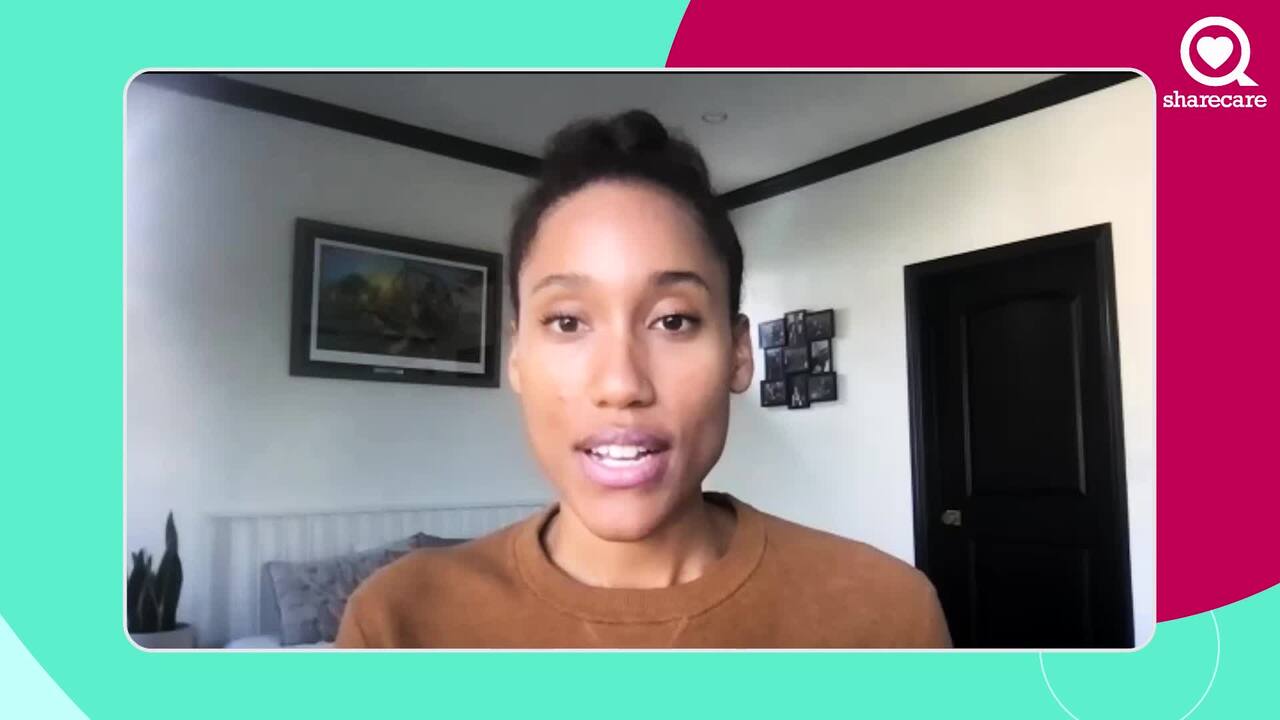
you feel like you don't belong. I started teaching yoga and meditation in the early mid 2000.
There weren't any teachers that looked like me, especially in L.A. Going from East L.A. To the West side,
which is two completely different worlds. And now I'm put into this position of teaching something
that I've learned, and feeling like I don't deserve to be here.
So I think part of what really helps us move out of that mindset is to ask yourself what your core
beliefs are about yourself. What do you believe about you? Right? And do you believe you're worthy of love as you are?
Do you believe that you deserve what you have? I will try to tell myself, you got this, Jen.
Like I'm like doing the fight or dance. We got this, you know, in my head. But I'll be honest, sometimes, just the self-talk does not
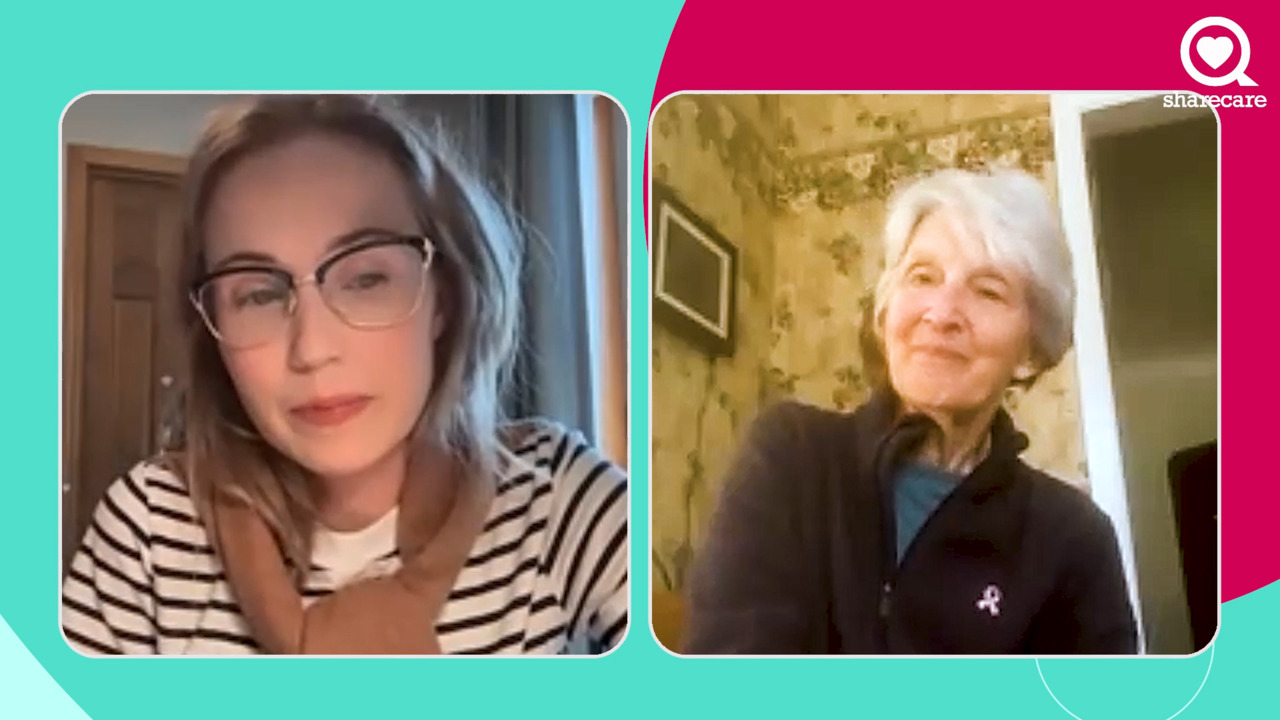
work for me. For me, so I'm a couples and family therapist and I'm divorced. And one of the things that felt so hard for me when
I got divorced was feeling like is anyone going to trust my judgment if I can't make this work.
If I can't make this work. --how you might think that way. Yeah. And I got so in my head about it. And the next day I got an email from somebody
who had followed a post that I had done that was pretty vulnerable. And she said, I've been waiting for you,
and your story is everything that I need. And because you've gone through this
is the reason why I couldn't work with a therapist that had a 20 year marriage. I needed to work with somebody who's been through it
and can be relatable, and to give hope. And so it was this huge lesson. And I can get so in my head and feel
like I have all the facts of this situation. I started looking instead for reassurance, although, I mean, I'm ready for a reassurance,
like I'm here for it if anyone wants to give me reassurance. But what I've learned is not to need that.
What I need is perspective. I'm so grateful you said that. I'm so grateful because everything
you said about this idea, I help other people why they might think I can't help myself and the shame that may come with it, whatever it might be.
And I so appreciate you even telling that to us, because there's so much strength in that story. And it's helping me right now.
And I'm so also inspired to know and see how you got through it, for us to know that when we feel that way
about a certain situation-- It's kind of like what you just said, it's not the end it. Actually, it might be the beginning.
I feel like after listening to you, Juliana, I feel like, you know, there's this way that, especially
as women, especially as experts, that were meant to perform in society, right?
And when you don't perform at that level, people are like, you didn't meet my expectation of you. There's a particular kind of thing culture around wellness.
Most dieticians are younger, white women. I mean 97% of the our entire field is white women.
Just by being in my skin, I walk into these spaces where people question me being there. So one of the ways that I actually kind of work
on that, interestingly enough, I'm going to go back to what Juliana said, is like I think about spaces like this.
You know what I mean, where this is like a bucket filling activity, to be in conversation with the four of you women
about these things that matter to us. And so I find that when I engage in things like that, it allows me to walk into spaces where I inherently
feel uncomfortable. And like I appreciate this, you know?
Gender inequities, racial inequities are very impervious to change. It can be very hard to change them,
but cultural change is inevitable. [MUSIC PLAYING]
I think we're starting to see slow shifts in government and in voters.
Gen Z is the most diverse generation that has existed. And it also is the most liberal so far.
Whether they remain that way, you know, this is something we're going to have to look at over time, but all kind of signs are pointing
to yes, that might happen, given what a broad diverse group of individuals it is. I do think that some of what we're
seeing in terms of the growth of women in government, for example, is a byproduct of changing cultural norms.
We just don't know yet quite the long term effects of that will have on government. [MUSIC PLAYING]
Intersectionality is understanding how different parts of someone's identity converge.
Someone may be a woman. They also may be black. They also may identify as LGBTQ, for example.
And that's at the intersection of all their different identities and affiliations. And it's really important we consider
this when we look at gender and pay disparities in the workplace.
I've worked with many women who are in technology. So they're in male dominated fields to begin with.
And then they may have another marginalized identity. A Black woman or an Asian woman, for example. And in that case, they face multiple barriers,
not just because of their gender, but also because of their race.
I've seen really unfortunate situations happen, where women of color are not promoted,
and their male counterparts are, even though their male counterparts don't have the same credentials or the same performance reviews
that they do. Workplaces bear a lot of responsibility in creating more equitable situations for women
of all type and people of all backgrounds, and colors. But we can take control and we can move faster
than the system can as a whole. And so I think we also have a responsibility to ourselves to do what we can do to improve our situation, not only for us,
but for other people. Even though we have like such a big age gap,
we we get along like we're the same age.
I live in an apartment downstairs. I just feel so happy to be living here, and being with her and my daughter.
She was growing up and I didn't want to miss that. We always laugh together, and we always have a great time. And we like a lot of the same things.
So it makes it easier for us to hang out. And we're both leos. I feel like that makes us similar too. Yes, I do too.
Sometimes people don't understand how close we are. I mean, we tell each other almost everything. And I will give her comfort if something's bothering her
or whatever. It's an extra person to go to, you know, Jessie. With my grandma, like, some of my friends sometimes they like leave me out and stuff,
but she can't really like even leave me out.
So that's-- I would never leave you out, trust me. With Jessy around, a lot of times,
even if I want to be sad, I can't be sad. As soon as she comes into the picture, that's it, I'm happy. She's just such a great kid.
I can't-- I can't explain it. It's just unbelievable. I'm so fortunate [MUSIC PLAYING]
The best advice that I would have to pass to the next generation of women.
Trust your gut and your light, and don't dim your light for anybody. Believe that you can do it.
You are responsible for your own happiness and you need to go and find it. Keep to your morals keep to your integrity. Continue the good fight for equality.
It's really important how you treat people, because the same people who help you up are going to catch you when you fall.
Lift your other leg fellow girls up. Be all about girl power. Womanhood is you. Womanhood is everything that's inside of you.
The most important thing is to just be you, because nobody else is. [LOGO]
womens health

Browse videos by topic categories
A
B
C
D
E
F
G
H
I
J
K
L
M
N
O
P
Q
R
S
T
U
V
W
X
Y
Z
ALL