 Back to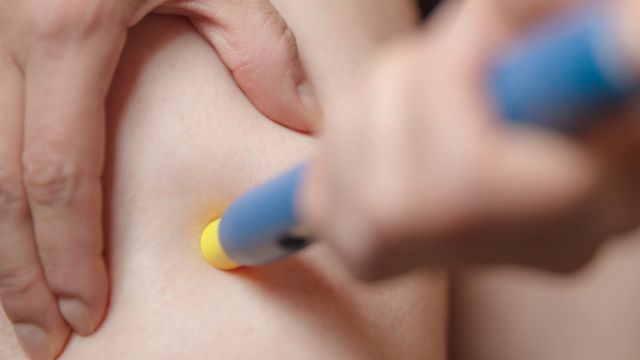
Updated on August 8, 2025
Treatment options for overweight and obesity have changed significantly in recent years, with new medications that help promote and maintain weight loss by mimicking naturally occurring substances in the body, such as glucagon-like peptide-1 (GLP-1) and glucose-dependent insulinotropic polypeptide (GIP). These medications are typically taken as subcutaneous injections.
Subcutaneous injections are administered into the layer of tissue directly below the skin called the subcutaneous layer. The subcutaneous layer offers a good route for administering these drugs, with slow and steady (and effective) absorption into the body.
These injections can be self-administered after training from a healthcare provider, but they can also take some getting used to. If you or a loved one has been prescribed an injectable medication or is considering an injectable medication, below are some steps to help you get started, or to help you understand what to expect.
Learning to administer an injectable medication
If the idea of self-administering an injection is a little bit intimidating, that’s perfectly normal. Know that many people take injectable medications every day to treat a variety of health conditions.
These drugs may come in prefilled injection pens. Others are available in vials and are administered with a syringe. A healthcare provider will instruct you on how to use this device.
Steps to help get started with self-administered injections:
- Always wash your hands thoroughly with soap and warm water before administering any kind of injection.
- Read the instructions carefully. If you have questions or concerns, ask your healthcare provider or pharmacist.
- Ask your healthcare provider for a demonstration for the injection process from start to finish.
- Ask if there are ways you can practice, such as a demo injection pen or a practice pad.
- Know what supplies you will need (such as needles, alcohol pads, gauze, and sharps containers).
- Know how to prepare the injection and check the dosage.
- Know what the medicine should look like (for example, clear and not cloudy).
- Know the location on the body where the medication can be injected (for example, on the stomach or the thigh).
- Ask how to choose a spot to insert the needle (you want to avoid bruises, lumps, or scars).
- Know the angle the needle should be inserted at.
- Know how to rotate injection sites. Keeping a log of where an injection was given each day can be helpful.
- Ask how to dispose of the needle/and or pen when finished.
In addition to knowing how to take a medication, it’s also important to know how to store a medication and how to handle (and not handle) a medication. For example, storing the medication in a refrigerator at the appropriate temperature, not shaking the medication, and paying attention to expiration dates.
Different medications have different prescribing requirements, are approved for different age groups, and require different dosing schedules. Regardless of what medication you are taking, this medication will need to be taken as intended. If you have questions, your healthcare provider will be your best source of information.
It’s also important to follow the other parts of a treatment plan. Medications are typically more effective when combined with lifestyle interventions and are intended to be used alongside changes to diet and exercise routines.


