You know that a healthy diet can help prevent heart disease, obesity, diabetes and other health woes. Turns out, what you eat affects your prostate, too. Along with exercise and not smoking, one of the most crucial modifiable risk factors for preventing prostate cancer and enlarged prostate is diet.
Lose weight
Carrying too many pounds? Make it priority to lose weight. The most consistent finding is that body size influences your prostate cancer risk, says June Chan, ScD, associate professor of epidemiology, biostatistics and urology at the University of California San Francisco. Men who are overweight or obese have a greater risk of developing aggressive prostate cancer and of dying from the disease.
"If men overeat, in theory, they're increasing their risk of developing aggressive prostate cancer," says Elizabeth A. Platz, ScD, MPH, head of cancer epidemiology at Johns Hopkins Bloomberg School of Public Health.
Eat less meat and dairy
Guys who eat a lot of meat (especially red meat), drink lots of milk or gobble dairy-based foods tend to have a higher risk of prostate cancer, Platz says. Beef, processed meat (e.g., bacon, hotdogs, and deli meat), poultry with the skin and full-fat dairy appear to be the prostate's biggest foes, Chan adds.
That goes not just for cancer, but for an enlarged prostate, which is linked to diet, as well. "Men who eat red meat are three times more likely to have an enlarged prostate, and those who eat dairy are twice as likely to develop an enlarged prostate," says men's nutrition expert Jim White, RD.
Eat more veggies
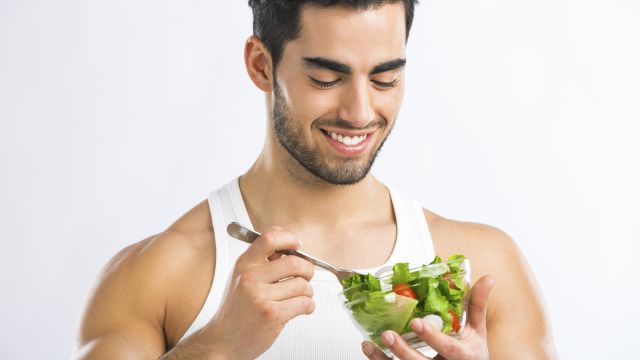
To keep your prostate happy, bulk up on vegetables. Adding three or more servings of veggies a day to your diet can cut your risk of prostate cancer in half. The cruciferous kind (e.g., broccoli, kale, cauliflower, cabbage and Brussels sprouts) may have an especially potent effect —especially if you eat three or more servings a week, which can lower your prostate cancer risk by an extra 41 percent. Some studies suggest that lycopene, a chemical found mainly in tomatoes, can also slow prostate cancer growth.
A diet that's good for the prostate is also good for your overall health. Instead of looking for one or two magic ingredients, focus on what your plate looks like day in and day out. "Aim for a Mediterranean-type diet with more whole grains and vegetables, minimal intake of sugar and sweets, and less protein from meat," Chan says. "If you're eating animal sources, choose fish or skinless poultry.”