Updated on August 12, 2025.
Asthma can develop at any time in life. You aren't necessarily born with it. You can develop it as an adult. If you don't recognize the symptoms of asthma—and treat them properly—your lungs can suffer damage. If you experience any of the following symptoms and they don't go away, work with your healthcare provider (HCP) to investigate their cause.
You have a chronic, persistent cough
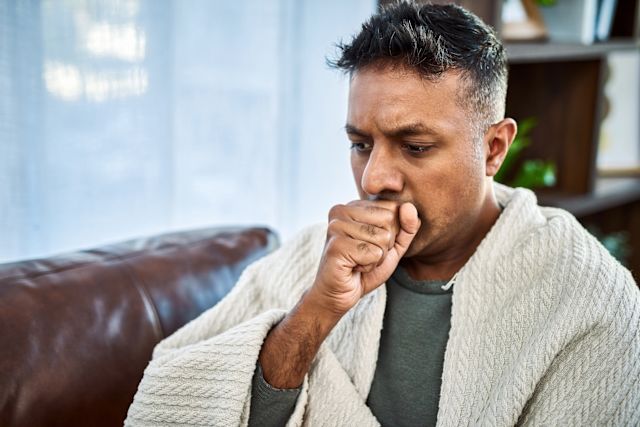
This is probably among the least surprising signs of asthma. A cough is your body's normal defense system at work. It's trying to expel irritants such as pollen, smoke, and mucus from your lungs. A cough could stem from a cold or sinus infection that led to post-nasal drip, which can last up to several weeks. If your cough just doesn't seem to be letting up, talk to your HCP.
You're constantly getting bronchitis or had it frequently as a child
When you have bronchitis, your bronchial tubes, which carry oxygen to your lungs, become irritated and inflamed. When this happens, they make mucus and you cough because your body is trying to get rid of it. Having bronchitis often as a child may increase the likelihood of developing asthma as you get older. It's not known, though, whether bronchitis as a child causes asthma as an adult or just increases susceptibility to lung issues. Research is underway to clarify the relationship between bronchitis and asthma.
You're always clearing your throat
Your throat, nasal passages, and sinuses are lined with mucous membranes. If something irritates them, you produce even more mucus. When the mucus gets stuck in your throat, it's a natural reaction to try to clear it. The membranes in your throat may not be the only ones that are irritated. Having irritated mucous membranes in your throat and elsewhere could be a sign of asthma. Tell your HCP if you find you need to clear your throat quite often.
You get wheezy whenever you get a cold
Another sign of asthma is wheezing, especially when you have a cold. (Wheezing is a whistling or squeaking sound that air makes when it has trouble making it through your lungs.)
You wheeze or cough after exercise
Exercise is a common trigger for asthma. If you find after exercising you're wheezing and coughing quite a bit, it could be asthma. For some people, exercising in cold weather may cause this reaction. Keep track of your reaction to exercise—in all temperatures—and talk to your HCP.
You feel winded with light exercise
Do you feel tightness in your chest and/or winded after even light exercise? Do you have to sit down and catch your breath before you can continue? Unless you're really out of shape, it could be a sign of asthma.
You frequently cough at night
People who have asthma tend to cough when they're trying to sleep. The reason is that your airways naturally narrow a bit at night. When you have asthma, your airways are already narrowed. If they narrow even a little further, breathing becomes more difficult. You keep waking up because you have to cough.
You're always tired
If your airways are swollen, you have to work harder to breathe, which can make you tired. Many people with asthma frequently complain of being tired.
You often lose your voice
Losing your voice frequently is probably not a symptom of asthma by itself, but when you seem to be hoarse and have some of the other symptoms, it's worth further investigation with your HCP.
Whether you have classic or unusual asthma symptoms—or a combination of both—talk to your HCP. If you have been diagnosed with asthma, you can learn how to keep it under control and still lead an active, healthy lifestyle.