 Back to
Updated on April 25, 2025
Metabolic dysfunction-associated steatotic liver disease (MASLD) occurs when there is a buildup of excess fat in the liver. It is formerly known as non-alcoholic fatty liver disease (NAFLD), a term that is still used in some sources. As its former name implies, MASLD is not related to liver damage caused by alcohol consumption. MASLD is associated with obesity, high cholesterol, hypertension, and problems with how the body uses insulin, such as diabetes and pre-diabetes.
The advanced stage of the disease is called MASH, which stands for metabolic dysfunction-associated steatohepatitis. At this stage, there is damage and scarring in the liver.
If you have been diagnosed with MASLD or MASH, it’s important to learn as much as possible about the disease and your diagnosis. This includes learning about the parts of the body that are affected by the disease. With that in mind, here is an overview of the liver, its many functions, and how it becomes damaged by MASLD and MASH.
The liver is the body’s chemical factory
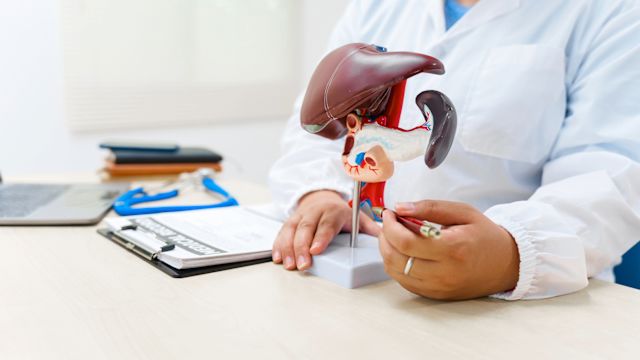
The liver is an organ in the abdomen, located above the stomach and intestines, and just below the diaphragm. It is the largest internal organ in the body and performs over 500 known functions.
The liver is sometimes described as the body’s “chemical factory” because many of its functions are related to the production of substances the body needs to carry out vital tasks, such as blood clotting factors, digestive bile, albumin (a main component of blood plasma), and cholesterol needed in the production of hormones. The liver also acts as a filter for the blood, breaking down cellular waste products, medications, alcohol, and other substances that need to be removed.
How fat accumulates in the liver
There are numerous types of fats which the body needs for different reasons. Fats are important nutrients that the body needs for energy, the absorption of fat-soluble vitamins (A, D, K, and E), hormone production, and the building of cells.
Fat also refers to the adipose tissue in the body that stores fat molecules. Adipose tissue is important for energy storage, cushioning for internal organs, and insulation that helps regulate body temperature. It also helps regulate blood glucose, cholesterol, and hormone levels. However, having too much adipose tissue leads to overweight and obesity.
The liver also plays an essential role in processing and producing fats:
- The liver produces bile that the body needs to digest and metabolize fats that are consumed in food.
- The liver converts excess sugars and proteins into fats that can be stored and saved for a time when the body needs energy.
- The liver produces a fatty substance called cholesterol, which is a major component of cell membranes and hormones.
MASLD occurs when these processes break down, causing excess amounts of different fat to accumulate in the liver. Over time, this can lead to MASH, the more advanced form of the disease. With MASH, there is inflammation in the liver, fibrosis (where healthy liver tissue is replaced with scar tissue), and a loss of liver function. Over time, this can lead to cirrhosis, severe scarring that interferes with the liver’s ability to function and changes the structure of the liver.
Treatment for MASLD and MASH
If you or a loved one has MASLD or MASH, the best thing you can do is work with a healthcare provider who is experienced in treating these conditions. MASH requires an individualized approach to treatment, and a healthcare provider will be your best source of information.
Treatment typically involves lifestyle changes, including weight loss, changes to diet, increasing physical activity, and limiting alcohol. Treatment will also include managing any health conditions that are contributing to MASH, such as diabetes or other metabolic disorders. There is also a medication for MASH with moderate-to-severe scarring (but not cirrhosis) that was approved in 2024.


