7 surprising signs of dementia
Be on the lookout for these signs your brain health is at risk.
Updated on August 4, 2025
Memory impairment is probably the best-known symptom of dementia conditions including Alzheimer’s disease. But there are other, surprising warning signs that your brain health is at risk. Be on the lookout for these lesser-known symptoms, and call a healthcare provider if you suspect you or a loved one might be developing the disorder.
You’re having dental problems
Do you find you have more cavities lately, or have you even lost a few teeth? That could mean you’re at risk for dementia. Studies suggest that people who have more missing teeth may be more likely to develop dementia and cognitive impairment.
Neglecting your teeth can lead to inflammation of the gums. Though it is not proven, there is some research that points to possible connection between the two, says G. Peter Gliebus, MD, a neurologist in Boca Raton, Florida. Tooth loss may also be a sign of how well you take care of yourself (or how well you’re able to take care of yourself).
You start walking differently
Walking slower can be an early predictor of dementia. “That’s one of the signs of brain degeneration,” says Dr. Gliebus. And it’s not just walking slower—changes in stride length and variability can also predict cognitive decline.
Sometimes a walking test for someone with early Alzheimer’s or mild cognitive impairment will seem normal, until the person is asked to do something else while walking, like counting backwards or naming as many animals as they can. If their gait slows drastically, it could be a red flag.
You’ve been sleeping more (or less)
Changes in the circadian rhythm—the body’s internal clock—can be a sign of impending dementia. “Sleep centers can be affected by brain degeneration,” says Gliebus. “That could mean hypersomnia (sleeping a lot), insomnia, fragmented sleep, or starting to sleep during the day.”
Most healthy adults should sleep between seven and nine hours each night. Some research suggests that middle-aged and older adults who regularly get fewer than five or six hours—or more than nine—may be at an increased risk for dementia.
You can’t find the words
When dementia begins to affect the areas of the brain that control language, communication can become difficult. If it progresses to the point you lose the ability to speak or understand speech, it is called aphasia.
Speech issues often begin subtly, by stumbling over a word here and there. People may use the wrong words, have trouble finding the right words, mispronounce things, speak slowly or haltingly, or talk around a word—“that place where they bring you the food” instead of “restaurant." It’s important to note that some problems with word retrieval are a normal part of aging, but be on the lookout for other symptoms.
Your judgment and self-control change
Some forms of dementia affect the parts of the brain that govern judgment, self-control, violence, and sexual behavior. Dementia can also cause frustration and anger in daily life, when you’re no longer able to do the things you used to. Some research suggests people with dementia are more likely to show aggressive behaviors than people without dementia, or people with mild cognitive impairment.
Occasionally, as judgment becomes more compromised, law troubles could occur. Crimes sometimes committed by people with dementia include theft, trespassing, and public urination.
You display inappropriate sexual behavior
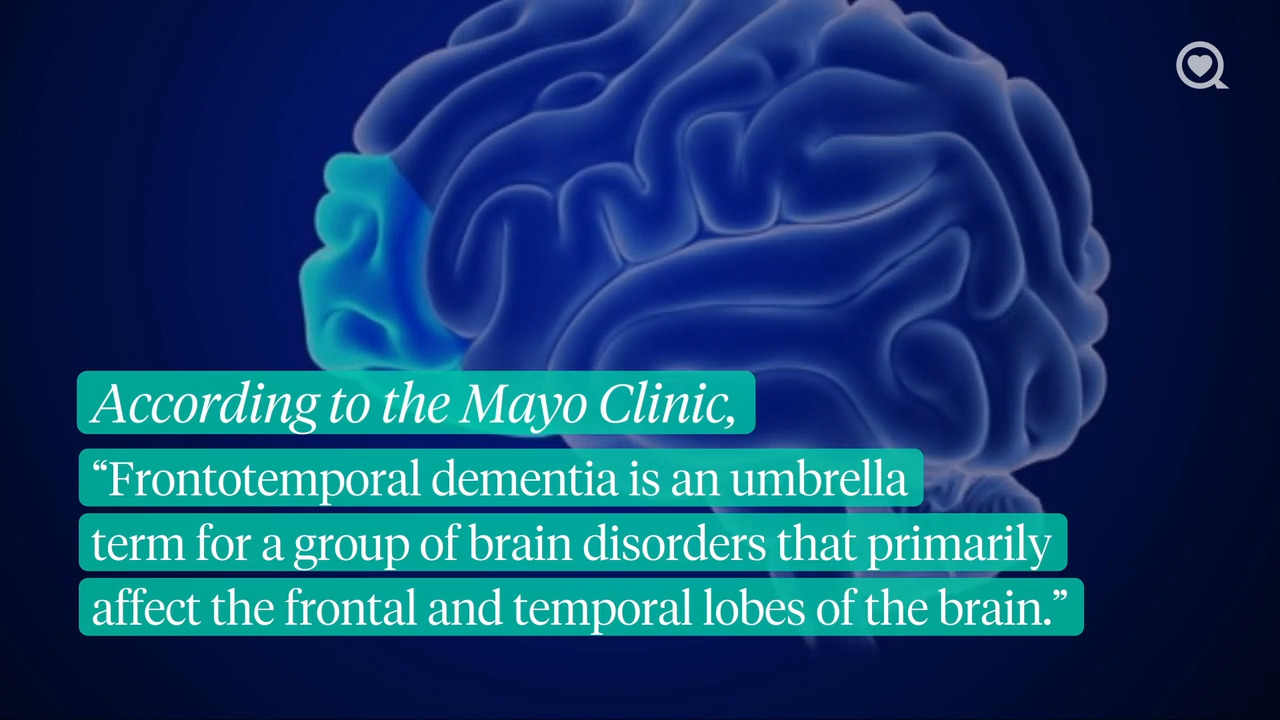
While inappropriate sexual behavior can happen among patients with late-stage Alzheimer’s disease, it may occur early on in patients with another type of dementia called frontotemporal dementia. “There is no standard behavioral change,” says Gliebus. “It depends on the disease and the parts of the brain that are affected.”
Inappropriate sexual behavior can include harassing language, stripping, groping, and other forms of sexual conduct.
Your sense of smell is off
Can you no longer tell the difference between two very different odors, like gasoline and lemons? Or are you increasingly unable to smell anything at all? For older adults, it could be an early sign of dementia. While some loss of smell is normal as you age, decline has also been linked to cognitive impairment.
Loss of smell is also an early symptom of Parkinson’s disease, which may precede dementia.
Li L, Zhang Q, et al. Tooth loss and the risk of cognitive decline and dementia: A meta-analysis of cohort studies. Front Neurol. 2023 Apr 17;14:1103052.
Qi X, Zhu Z, Plassman BL, Wu B. Dose-Response Meta-Analysis on Tooth Loss With the Risk of Cognitive Impairment and Dementia. J Am Med Dir Assoc. 2021 Oct;22(10):2039-2045.
National Institute on Aging. Tooth loss in older adults linked to higher risk of dementia. October 5, 2021.
Collyer TA, Murray AM, et al. Association of Dual Decline in Cognition and Gait Speed With Risk of Dementia in Older Adults. JAMA Netw Open. 2022 May 2;5(5):e2214647.
Montero-Odasso M, et al. CCCDTD5 recommendations on early non cognitive markers of dementia: A Canadian consensus. Alzheimers Dement (N Y). 2020 Oct 17;6(1):e12068.
Kim SW, Kim DH, et al. Gait impairment associated with neuroimaging biomarkers in Alzheimer's disease. Sci Rep. 2025 Feb 14;15(1):5539.
Sabia S, Fayosse A, et al Association of sleep duration in middle and old age with incidence of dementia. Nat Commun. 2021 Apr 20;12(1):2289.
Robbins R, Quan SF, et al. Examining sleep deficiency and disturbance and their risk for incident dementia and all-cause mortality in older adults across 5 years in the United States. Aging (Albany NY). 2021 Feb 11;13(3):3254-3268.
Howard C, Mukadam N, et al. The effects of sleep duration on the risk of dementia incidence in short and long follow-up studies: A systematic review and meta-analysis. Sleep Med. 2024 Dec;124:522-530.
Westwood AJ, Beiser A, et al. Prolonged sleep duration as a marker of early neurodegeneration predicting incident dementia. Neurology. 2017 Mar 21;88(12):1172-1179.
Liang Y, Qu LB, et al. Non-linear associations between sleep duration and the risks of mild cognitive impairment/dementia and cognitive decline: a dose-response meta-analysis of observational studies. Aging Clin Exp Res. 2019 Mar;31(3):309-320.
Northwestern Medicine. Primary Progressive Aphasia. Accessed August 4, 2025.
Emory University. Signs of a Normal Aging Mind. Accessed August 4, 2025.
Liljegren M, Naasan G, et al. Criminal behavior in frontotemporal dementia and Alzheimer disease. JAMA Neurology. March 2015. 72(3), 295–300.
Alzheimer’s Society UK. Aggressive behavior and dementia. December 13, 2021.
Yu R, Topiwala A, et al. Aggressive Behaviors in Alzheimer Disease and Mild Cognitive Impairment: Systematic Review and Meta-Analysis. Am J Geriatr Psychiatry. 2019 Mar;27(3):290-300.
Kuffel RL, Byers AL, et al. Prevalence of dementia and mild cognitive impairment before incarceration. J Am Geriatr Soc. 2022 Jun;70(6):1792-1799.
Pacyna RR, Han SD, et al. Rapid olfactory decline during aging predicts dementia and GMV loss in AD brain regions. Alzheimers Dement. 2023 Apr;19(4):1479-1490.
Dintica CS, Marseglia A, et al. Impaired olfaction is associated with cognitive decline and neurodegeneration in the brain. Neurology. 2019 Feb 12;92(7):e700-e709.
Tian Q, An Y, et al. Associations of Olfaction With Longitudinal Trajectories of Brain Volumes and Neuropsychological Function in Older Adults. Neurology. 2023 Feb 28;100(9):e964-e974.
Tian Q, Bilgel M, et al. Olfaction, Cognitive Impairment, and PET Biomarkers in Community-Dwelling Older Adults. J Alzheimers Dis. 2022;86(3):1275-1285.
Parkinson's Foundation. 10 Early Signs of Parkinson's Disease. 2022. Accessed June 3, 2022.

More On


video

article


video


video


video