8 ways to build a healthy brunch at home
These mid-morning meals taste like your restaurant favorites, without the crowds and cost.
Updated on June 16, 2025
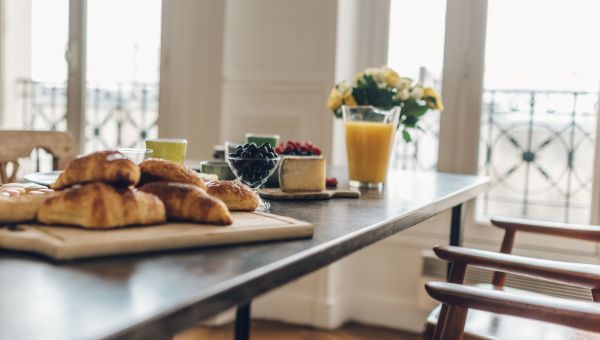
Gathering for brunch with friends? Instead of heading out for a high-priced meal, save money and avoid crowds by cooking some of these simple, dietitian-approved recipes at home. Loaded with fiber and protein, they’ll fill you up and help power you through any busy post-brunch afternoon.
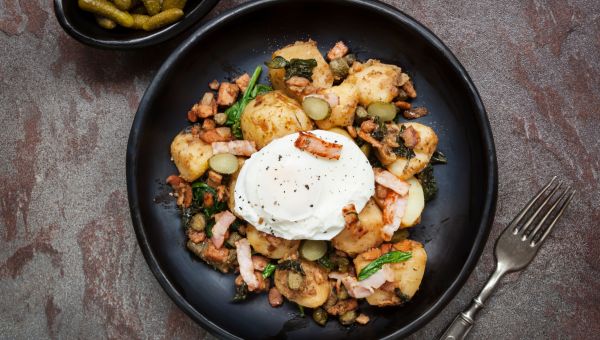
Piled-high veggie hash
Many restaurant menus offer piles of crisp bacon as part of their standard brunch plates. At home, you can enjoy that smoky bacon flavor with only a fraction of the saturated fat. Eating too much saturated fat can increase your risk of heart disease and stroke.
“Fry just two pieces of bacon in a skillet and set them aside,” says Whitney Linsenmeyer, PhD, RD, an assistant professor in the department of nutrition and dietetics at Saint Louis University in St. Louis, Missouri, and a spokesperson for the Academy of Nutrition and Dietetics.
Don't rinse the pan just yet. Add your favorite chopped veggies—like sweet potato, kale, and Brussels sprouts—to the bacon fat to make a veggie hash that serves a crowd. Top each portion of veggies with a poached egg and a few crumbled bits of bacon. This dish offers more than 6 grams of protein in the egg alone and a ton of flavor from only a little bit of bacon.
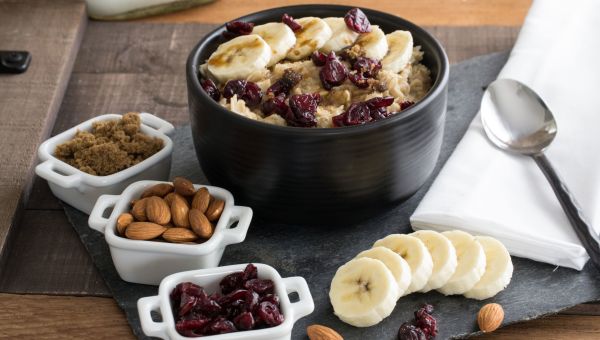
DIY oatmeal bar
“A big batch of fiber-rich oatmeal is easy to make in advance and people love to mix and match their own toppings,” says Isabel Maples, RDN, a registered dietitian in Virginia, and spokesperson for the Academy of Nutrition and Dietetics.
She suggests laying out toppings like chopped fruit, nuts, seeds, and even a few mini dark chocolate chips. Set out both dairy and nondairy milks, like almond, coconut, or soy, as well.
Oatmeal delivers a healthy dose of digestion-boosting fiber and protein, too. Each serving has 4 grams and 6.6 grams, respectively, per cooked cup.
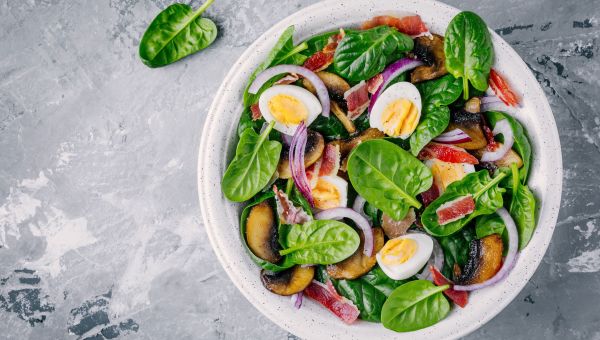
Build-it-yourself brunch salads
If you're like many people, you’re probably trying to fit more servings of vegetables into your day. Just 10 percent of adults in the United States eat the daily recommended amount of fruits and vegetables, according to the Centers for Disease Control and Prevention.
Salad is an overlooked brunch option, according to Linsenmeyer. “Take inspiration from the classic French Niçoise salad,” she says. Set out platters of chopped greens (like Bibb lettuce, kale, or spinach), cured salmon, fresh herbs (like thyme, basil, and oregano), and hardboiled eggs. Traditional Niçoise has steamed green beans and potatoes, along with raw tomatoes, but you can substitute with any veggies you want. Complete the salad with a store-bought or home-made vinaigrette. Make sure to scan the saturated fat and sugar content of any pre-made dressings; it’s wise to serve them on the side so guests can decide how much they want.
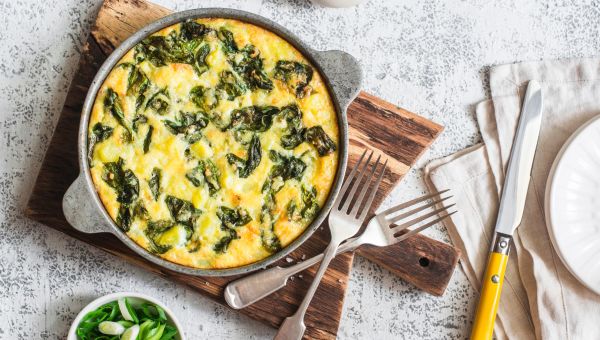
Baked veggie frittata
A frittata is a large, flat omelet you can make with plenty of your favorite vegetables, like bell peppers, spinach, or mushrooms. It comes together quickly and easily, too. “It’s like a quiche without the crust," says Maples.
Coat the bottom and edges of an oven-safe skillet with olive oil. (Cast-iron skillets are a great choice.) Sauté your veggies until tender, season with a pinch of salt and pepper, then add about eight beaten eggs, or just enough to fill the pan halfway. You can add a bit more flavor by sprinkling in a serving of low-fat cheese, like cheddar or feta, or adding a few drops of hot sauce.
Cook on the stovetop over medium heat, and when the edges start to set, transfer your skillet to an oven preheated to 350°F. Bake until puffed and cooked through, about 15 to 20 minutes. “Make it ahead, and serve it at room temperature," Maples suggests.
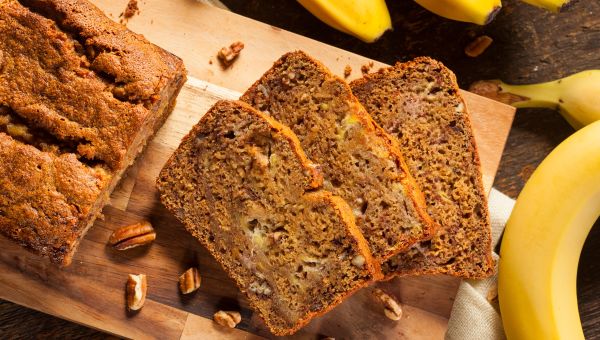
Whole-grain banana bread
A sweet treat that pairs well with coffee, banana bread is a brunch classic. No matter your favorite recipe, you can make it healthier by replacing half the all-purpose flour with whole-wheat flour and reducing the amount of sugar by 25 percent. For example, if a dish calls for 1/2 cup sugar, try using 1/4 cup.
Your guests probably won't notice the extra fiber, but they will like the toasty, nutty flavor of the whole wheat. And naturally sweet bananas shine through when you reduce the sugar.
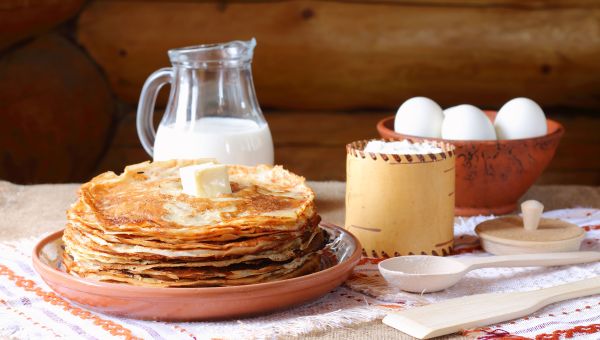
Don’t stop there, though. Many breakfast baked goods can be made healthier by switching flours and cutting sugar. Pancakes, waffles, and muffins are the best candidates for a morning makeover. Add back some of the sweetness and take in extra nutrients by nibbling with a serving of fruit.
Savory socca
Go savory and gluten-free with your pancakes by trying socca. Similar to a flatbread, socca is a popular French street food made by combining 1 cup of chickpea flour (sometimes called garbanzo bean flour) with 1 cup of water and a few pinches of salt. Preheat a 12-inch cast iron skillet in an oven set to 450°F. Coat the bottom with a thin layer of olive oil and bake the dough until set and crisp at the edges, about 15 minutes.
Top with fresh herbs, slice into wedges, and serve warm or at room temperature, with a side of eggs or a simple green salad. Thanks to the chickpeas, this easy and impressive brunch dish is packed with protein, fiber, and folate. Don’t be scared off by a new ingredient, either. Chickpea flour can be found in most grocery stores and can be used to thicken sauces or bind burgers. It also works subbed into baked goods.
Fruit and yogurt parfaits
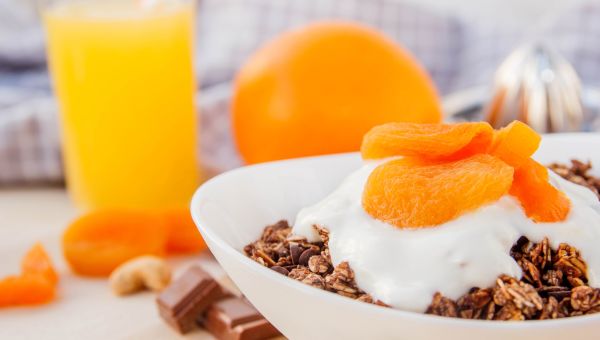
For a brunch menu item that feels like dessert, try fruit and yogurt parfaits. Start with plain low-fat or nonfat Greek yogurt with a thick, rich texture and plenty of protein. Avoid vanilla and other flavors, which often pack excessive amounts of sugar.
Scoop a dollop of yogurt into the bottom of a tall, clear glass and top with a layer of fresh fruit, like chopped pineapple, mango, and strawberries. Follow this with a sprinkle of muesli or granola, for crunch. Repeat until you fill the glass, creating pretty stripes of white yogurt and vibrant fruit.
A skinny bubbly substitute
For many people, part of the appeal of going out to brunch are the “bottomless” mimosas and Bloody Marys that sometimes come with it. “You might feel like you have to drink more to get your money’s worth,” says Maples.
But, among its many drawbacks, drinking too much alcohol in the morning can zap your energy, focus, and decision-making skills for the rest of the day. And over time, regular binging can raise your risk of many chronic health conditions, including heart disease and some cancers.
So, if you’re serving brunch for your friends at home, consider offering refreshing, festive, and nonalcoholic options like sparkling water mixed with pink lemonade. Linsenmeyer also suggests pureeing watermelon with a touch of salt, pouring the mixture into an ice cube tray, and cooling your drinks with these cubes instead of traditional ice. You can also garnish your "cocktails" with seasonal fruit, like apples, pears, or raspberries.
MedlinePlus. Facts about saturated fats. May 14, 2024.
USDA SNAP-Ed Connection. Seasonal Produce Guide. Accessed June 16, 2025.
Harvard Health Publishing. Most Americans don’t eat enough fruits and veggies. February 1, 2018.
Lee SH, Moore LV, et al. Adults Meeting Fruit and Vegetable Intake Recommendations — United States, 2019. MMWR Morb Mortal Wkly Rep 2022;71:1–9.
NIH National Institute on Alcohol Abuse and Alcoholism. Understanding Alcohol Drinking Patterns. February 2025.
Centers for Disease Control and Prevention. Alcohol Use: Alcohol Use and Your Health. January 14, 2025.
More On


video
article
slideshow


video


video