Back to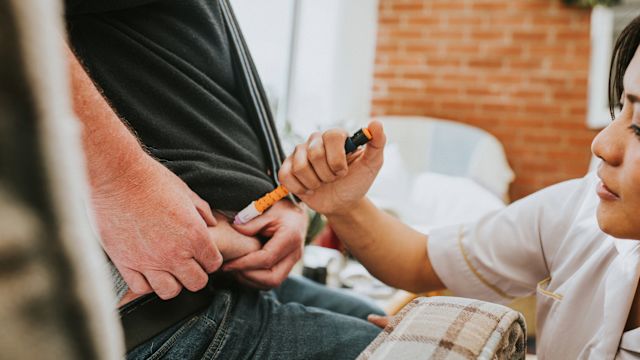
Updated on May 14, 2025
Many people living with type 2 diabetes manage the health condition with medicines that are administered with injections. This includes insulin medications as well as non-insulin injectable medications, like GLP-1 (glucagon-like peptide-1) agonists.
Injections are categorized by the type of tissue or structure in the body where the medication will be injected and absorbed. For example, intramuscular injections, used for many vaccines, are given into a muscle. Intravenous refers to delivering a medication in a vein, a method used to administer fluids, chemotherapy, antibiotics, and many other types of medications.
Most insulin and injectable GLP-1 medications are administered as subcutaneous injections. These are injections into the subcutaneous layer, a layer of fatty tissue directly beneath the skin. The subcutaneous layer offers a good route for administering these drugs, with slow and steady (and effective) absorption into the body.
In order for a medication to work as intended, it needs to be taken as intended. The questions below cover topics that should be discussed with a healthcare provider when starting any new medication, as well as common mistakes to avoid when administering an injection.
What to ask about your medication
While this article is focused on injectable medications, this list can apply to other types of medications, such as oral medications. Also, while this article is focused on diabetes, these questions could also be helpful for medications that are not directly related to managing diabetes, such as cholesterol medications.
What to ask your healthcare provider about a medication:
- What is the name of the medication?
- What dosage am I being prescribed?
- How should this medication be stored?
- How often do I need to take this medication?
- What do I do if I miss a dose?
- What is the goal of taking this medication?
- How will I feel while taking this medication?
- What is the risk of side effects?
- Is there a risk of severe side effects? What symptoms do I need to watch for? What do I need to do if I experience these symptoms?
- Is there anything that I need to avoid while taking this medication? Can this medication interact with other medications?
- How will we know if this medication is working?
- What are our next steps if this medication does not work?
- What will this medication cost? Who can I talk to if I have concerns about the cost of treatment?
Keep a list of all medications you are taking and the dosages. This list should include prescription medications, over-the-counter medications, and any supplements you are taking (including vitamins and herbal supplements).
Learning to administer injections of a diabetes medication
While injections can feel intimidating, know that many people use injectable medications successfully. Your healthcare providers can instruct you on how to administer injections. Depending on the medication, injections may be given with a prefilled injection pen or a needle and syringe.
Here are some steps to help you get started:
- Always wash your hands thoroughly with soap and warm water before administering any kind of injection.
- Read the instructions carefully. If you have questions or concerns, ask your healthcare provider or pharmacist.
- Ask your healthcare provider for a demonstration for the injection process from start to finish.
- Ask if there are ways you can practice, such as a demo injection pen or a practice pad.
- Know what supplies you will need (such as needles, alcohol pads, gauze, and sharps containers).
- Know how to prepare the injection and check the dosage.
- Know what the medicine should look like (for example, clear and not cloudy).
- Know the location on the body where the medication can be injected (for example, on the stomach or the thigh).
- Ask how to choose a spot to insert the needle (you want to avoid bruises, lumps, or scars).
- Know the angle the needle should be inserted at.
- Know how to rotate injection sites. Keeping a log of where an injection was given each day can be helpful.
- Ask how to dispose of the needle/and or pen when finished.
In addition to knowing how to take a medication, it’s also important to know how to store a medication and how to handle (and not handle) a medication. For example, storing the medication at the appropriate temperature (like a refrigerator) and not shaking a syringe (which can damage it).
Remember, in order for a drug to work as intended, it needs to be taken as intended. If you have questions, ask your healthcare provider.