Why are some doctors hesitant about alternative medicine?
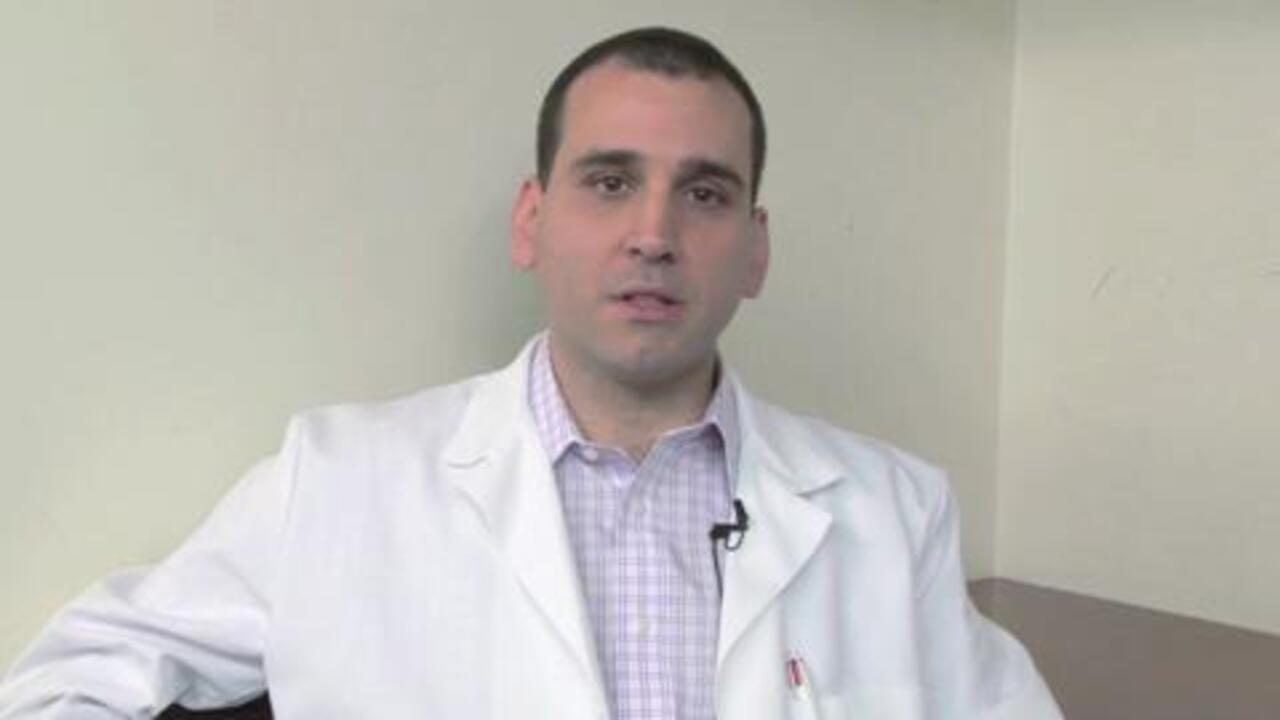
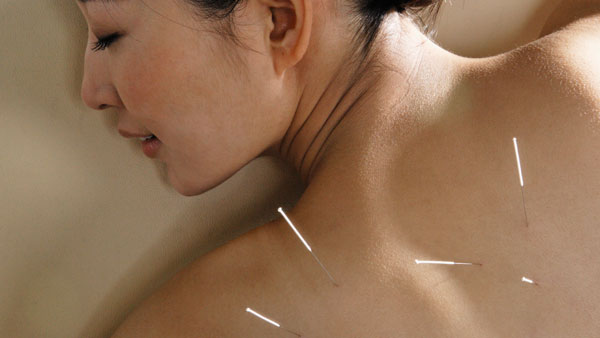
Some doctors and medical professionals are resistant to alternative medicine because there is often a lack of scientific evidence to support many of the modalities. Preventive medicine expert David Katz, MD, discusses this concept.

Transcript
Alternative medicine makes conventional practitioners uneasy because it's different from what they do. It's different from what they learned
in medical school or residency. [SOFT MUSIC]
Generally, when you hear wholesale rejection of alternative medicine, what--
what those physicians or professionals are thinking is voodoo, that this is just unsubstantiated nonsense.
And to be quite honest, there is some of that. One of the problems with a domain that's not clearly defined is that anybody can say,
I practice alternative medicine. I mean, the people working in health food stores wearing lab coats who have no medical training but routinely dispense medical advice,
one could argue they are alternative medicine practitioners. I've heard some pretty squirrely stuff. I heard someone declare themselves to me
a nutritional microscopist. Now, you know, I've written three editions of a nutrition textbook. I have no idea what that means.
And telling me that she looked through a microscope and saw white blood cells transform into bacteria.
This is voodoo. This is nonsense. So, you know, I think many of my conventionally
minded colleagues say, well, it's all nonsense. But see, that's wrong. The problem is there really is baby and bathwater
in alternative medicine, just as there is in conventional medicine. Interestingly, you know, if you invoke evidence as the key issue, about 60% of modern conventional medical
practice does not rise to the current standard of evidence. And when we put things to the test, things
that we take for granted as being good ideas, different kinds of surgery, mammography, all sorts of things,
but alternative medicine makes conventional practitioners uneasy because it's different from what they do. It's different from what they learned
in medical school or residency. And the idea prevails that there just isn't evidence to support it.
The reality is that there often is evidence. Often, that evidence, though, isn't as mature as conventional medicine likes it to be.
And when the evidence does mature-- so you're constantly getting this flow where when alternative medicine proves
that it does work, conventional medicine claims, it says, well, that's not alternative anymore. That belongs to us. The important thing for patients to realize,
though, is the alternative practitioners were there first. They may have been there first by a decade and sometimes two. And if you need help today, you don't
want to wait 20 years to have access to it. So I practice evidence-based integrative medicine for that very reason. I'm an open-minded skeptic.
I know that there is both good stuff and bad stuff in the world of conventional medicine and alternative medicine.
We have to choose very carefully. We have an approach to that in my clinic. And I would encourage every patient to be an open-minded skeptic.
It's not good for you just because it's natural. Rattlesnake venom and botulinum toxin are natural, right?
On the other hand, you deserve access to a fuller spectrum of treatment options so that you get the best, most effective, safest remedy
for you, whatever that happens to be. And if it falls within the realm of conventional medicine, fine. If it falls within the world of alternative medicine, also fine.
If it's safe and effective and gets the job done for you, that's what matters. So I would encourage you to find clinicians
who are open-minded skeptics. And I'd advise you to be one as well. [AUDIO LOGO]
alternative medicine


Browse videos by topic categories
A
B
C
D
E
F
G
H
I
J
K
L
M
N
O
P
Q
R
S
T
U
V
W
X
Y
Z
ALL