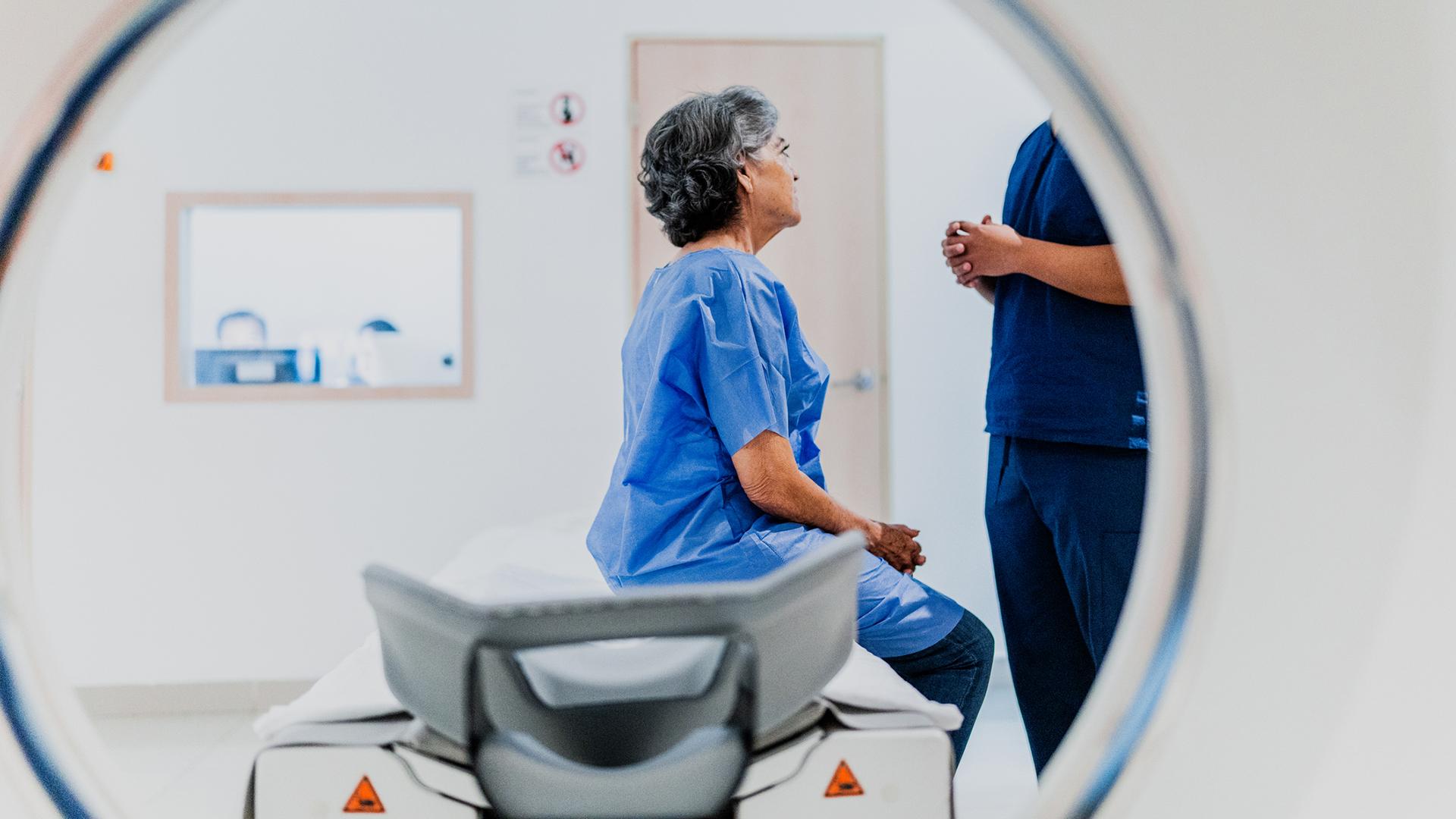
Artificial intelligence is being explored across several points in epidermal growth factor receptor (EGFR)-mutated non-small cell lung cancer (NSCLC) care, though most applications remain in earlier stages of clinical validation. Deep learning models applied to CT, PET, or histology images are being studied for their ability to predict EGFR mutation status non-invasively, an approach still largely tested in retrospective, single-institution datasets.1,2 These models typically rely on identifying histologic and radiographic patterns associated with EGFR-mutant tumors, but performance has varied meaningfully across studies, and single-center models may not generalize reliably to other populations or imaging protocols without external validation.2
Separately, artificial intelligence (AI)-based tools are being explored to help identify patients who may benefit from more complete biomarker testing, particularly in settings where tissue is limited.3,4 While early evidence suggests these tools could complement standard testing, this remains an emerging use case rather than routine clinical practice. One emerging approach involves multimodal AI tools that integrate imaging, genomic, or transcriptomic data with pathology, an approach that has demonstrated improved performance in several studies.5
These tools have not yet been validated for routine clinical decision-making, and prospective, multi-site studies remain necessary before they can meaningfully inform diagnosis or treatment selection in everyday practice.3
At present, AI in this space represents a developing area of investigation rather than a current standard of care. Clinicians should continue to rely on established molecular testing and guideline-based pathways as this evidence base matures.
Take our mNSCLC quiz to see how your knowledge compares to your peers.